
Last updated October 17, 2026
 Metal roofing
 Architectural shingles
 Tile roofing
 GAF
GAF Owens Corning
 Flat & low-slope
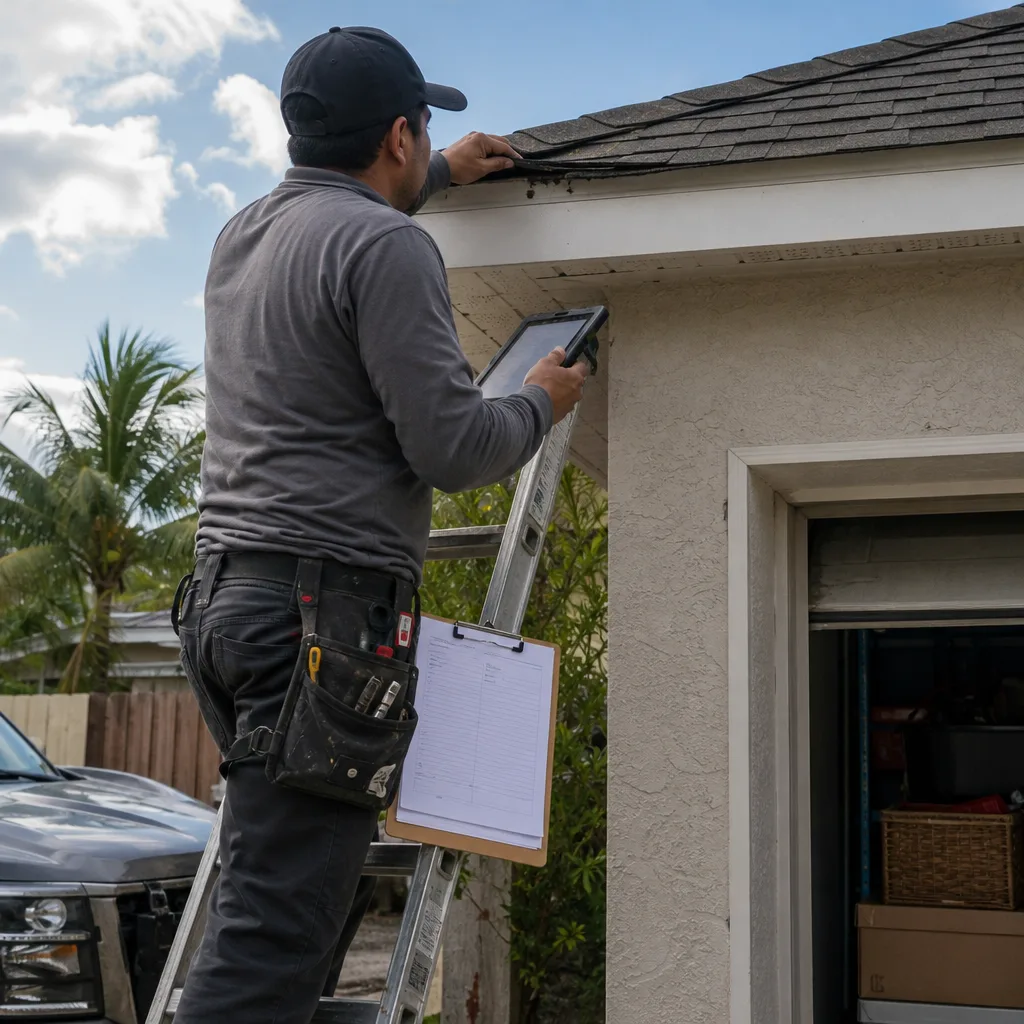
Free roof inspection with deck photos before we talk money - GAF and Owens Corning certified installation
Roofing Permits, Codes & Inspections in FL: What You Need to Know
A homeowner in Coral Gables found out three days before closing that the roof replacement done in 2021 was never permitted. The buyer’s lender killed the loan. The seller had to pay $4,800 out of pocket for a structural review, permit retrofitting, and a Miami-Dade inspection before any new buyer would look at the house. This happens more often than anyone in Miami wants to admit, because most roofing guides treat permits as red tape rather than what they actually are: the mechanism that determines whether your roof is insurable, whether your claim gets paid, and whether your home can be sold. This guide explains the permit, code, and inspection process in Florida, with the Miami-Dade specifics that actually matter when money is on the line.
Quick Answer
Florida law requires a permit for most roofing work that involves replacing decking, underlayment, or shingles beyond a minor repair, and Miami-Dade County adds stricter rules through its High Velocity Hurricane Zone (HVHZ) code. A Miami-Dade re-roof permit typically costs between $300 and $600 in fees, requires two inspections (dry-in and final), and applies to any job where more than 25% of the roof is replaced in a 12-month period. Skipping the permit can void your manufacturer warranty, get your insurance claim denied, and create a legal problem when you sell.
Styles & brands we work with
Table of Contents
- The Real Difference Between a Re-Roof and a Repair Permit in Miami-Dade
- Why Miami-Dade’s HVHZ Code Is Stricter Than the Rest of Florida
- The NOA System: How Miami Approves Every Material on Your Roof
- The Miami-Dade Inspection Sequence, Step by Step
- What Happens When Work Is Unpermitted
- Open Permits, Failed Inspections, and Property Records
- Insurance Claims, Warranties, and the Permit Connection
- Common Mistakes to Avoid
- When to Call a Professional
- Frequently Asked Questions
The Real Difference Between a Re-Roof and a Repair Permit in Miami-Dade
Here’s the threshold most Miami homeowners never hear about: any roof work that replaces more than 25% of the roof surface within a 12-month period is legally a re-roof, not a repair, and it requires a full re-roof permit. That percentage is not open to interpretation. If you patch 30% of your shingles after a storm and then another 30% six months later, you’ve crossed the line, and Miami-Dade’s building department will treat the combined work as a re-roof that requires full HVHZ compliance.
A repair permit in Miami-Dade is for work that stays under that 25% threshold and does not involve structural changes to the decking. The cost difference matters: a repair permit in Miami typically runs $150 to $300, while a re-roof permit runs $300 to $600 depending on the roof’s square footage and valuation. But the bigger cost difference comes from what each permit triggers. A re-roof permit requires you to bring the entire roof up to current HVHZ code, which may mean upgrading fasteners, adding a secondary water barrier, or replacing flashing that a repair permit would not touch.
From our experience handling roof repair in Miami, we regularly see homeowners surprised that a “simple patch” required a full re-roof permit once the damaged area was measured. The rule of thumb we tell every homeowner: if the damaged area is bigger than a standard bedroom, you are almost certainly in re-roof territory.
Miami-Dade Permit Thresholds at a Glance:
- Under 25% of roof surface in 12 months: repair permit, $150 – $300, basic inspection
- Over 25% of roof surface in 12 months: re-roof permit, $300 – $600, full HVHZ inspection sequence
- Any structural decking replacement: re-roof permit regardless of square footage
- Any work on a roof with a pitch steeper than 5:12: additional safety and inspection requirements
Why Miami-Dade’s HVHZ Code Is Stricter Than the Rest of Florida
The Florida Building Code (FBC) sets the baseline for the state, but Miami-Dade and Broward counties sit inside the High Velocity Hurricane Zone, which is a legally distinct code region with different rules. The reason is geographic: Miami-Dade sits where hurricane wind speeds are calculated at 175 mph or higher, and the county’s code is written around a house surviving an Andrew- or Irma-level storm without the roof peeling off and killing people inside.
The HVHZ code changes three things most other Florida counties do not require:
- Fastener counts: HVHZ demands more nails per shingle and specific nail patterns engineered for uplift resistance. A roof nailed for Orlando wind loads will fail a Miami-Dade inspection.
- Secondary water barrier: Miami-Dade requires a self-adhering membrane over the entire deck, not just in valleys, so the roof remains water-resistant even if shingles blow off mid-storm.
- NOA product approvals: Every material used, from the underlayment to the ridge cap, must carry a Notice of Acceptance from Miami-Dade County. Products approved by the statewide FBC but not by Miami-Dade’s NOA system cannot legally be installed here.
We’ve seen roofs from other Florida counties fail Miami-Dade inspection on day one because the underlayment was a generic FBC-approved product without an NOA number. The fix is a full tear-off and redo, and the homeowner pays for it because the permit was pulled under the wrong assumptions.
The NOA System: How Miami Approves Every Material on Your Roof
If you live in Miami, the NOA system is the single most important acronym in roofing that almost no homeowner knows about. NOA stands for Notice of Acceptance, and it’s Miami-Dade County’s own product approval program, separate from the Florida Building Code’s statewide product approval list. Before any roofing material can be legally installed in Miami-Dade, the manufacturer must submit it to the county for wind-uplift testing, water-infiltration testing, and quality-control review. If the product passes, Miami-Dade issues an NOA number, and that number must appear on the permit application and on the product itself.
Miami-Dade’s NOA database is public. You can look up any shingle, underlayment, or flashing product and see its approval status. Contractors who are sloppy about NOA compliance create a specific risk: the inspector fails the job, the manufacturer warranty is void because the product was not installed in its approved configuration, and the homeowner gets a notice that the roof does not comply with HVHZ. That notice can trigger an insurance non-renewal.
Manufacturers we work with, including Miami roof installation products from GAF and Owens Corning, all maintain current NOA approvals for the Miami-Dade market. When a roofing company in Miami writes a proposal, the NOA numbers for every material should be listed line by line. If they are not, you are looking at a contractor who does not understand Miami code, and the mistakes will be yours to pay for later.
The Miami-Dade Inspection Sequence, Step by Step
Miami-Dade re-roof permits require two core inspections, and the sequence is non-negotiable. Here is what actually happens, in order:
- Permit issuance: The contractor files drawings, product NOA numbers, and a valuation with the Miami-Dade Building Department. The permit is issued with the inspection schedule attached.
- Dry-in inspection: After the old roof is torn off and the new underlayment and water barrier are installed, but before any shingles go on, the contractor calls for inspection. The inspector checks the decking condition, verifies the secondary water barrier is installed to HVHZ requirements, and confirms the fastener pattern. If the decking has rot the contractor has to demonstrate the repair meets code before this inspection passes.
- Final inspection: When the shingles, flashing, and ridge caps are complete, the contractor calls for final inspection. The inspector checks shingle alignment, confirms NOA numbers match the permit application, verifies the drip edge and valley installation, and signs off if everything meets HVHZ standards.
- Permit closure: The Building Department marks the permit as closed, and a certificate of completion is issued. This is the document you need for an insurance binder, a warranty registration, and a future home sale.
One detail Miami homeowners miss: a contractor who calls for inspection before the work is actually ready can trigger a failed inspection on the property record, and that failed inspection stays visible even after the work passes later. We tell every homeowner: ask your contractor to confirm the roof is ready before each inspection is scheduled, because a failed inspection on the record can complicate a future sale.
What Happens When Work Is Unpermitted
An unpermitted roof in Miami is not a paperwork problem. It is a structural and financial problem that compounds over time. When roofing work is done without a permit in Miami-Dade, three specific things happen, and none of them can be fixed with a handshake.
First, the manufacturer warranty is void. Shingle manufacturers like Mercer Roofing Co Miami home partners GAF, CertainTeed, and Owens Corning all write the same requirement into their warranty terms: the roof must be installed to code by a licensed contractor with permits in place. If the work is unpermitted, the manufacturer will not honor a single warranty claim, even if the shingle itself failed in year two of a 30-year warranty.
Second, the insurance claim gets denied. Florida insurers now routinely cross-check permit records when a homeowner files a storm-damage claim. If the roof that was damaged was never permitted, the insurer takes the position that the roof did not legally exist. The claim is denied, and the homeowner is on the hook for the full replacement cost.
Third, the sale gets complicated. Under Miami-Dade disclosure rules, a seller must disclose unpermitted work. If the seller does not disclose it and the buyer’s inspector finds it, the seller faces a lawsuit. If the seller does disclose it, the buyer’s lender will likely refuse to finance the property until the permit is retrofitted, which means opening the roof to inspection, possibly replacing non-compliant materials, and paying the fees. We have seen this process take six weeks and cost $6,000 before any actual roofing work begins.
Open Permits, Failed Inspections, and Property Records
Every permit ever pulled on a Miami property lives in the public record, and it does not disappear when the work is done. It stays until it is formally closed. An open permit from a previous owner, even one that is ten years old, shows up in a title search, and it can block a closing just as effectively as a lien. Miami-Dade’s building department makes this easy to check: you can search permits by address for free on the county website.
Failed inspections work the same way. A failed inspection is a public record, and it remains attached to the property even after a later inspection passes. If a buyer’s inspector sees a history of failed roof inspections, the buyer will reasonably ask why, and if the answer is not documented, the deal can stall.
Here is what a buyer or seller should do when an open or failed permit appears in property records:
- Pull the full permit file from Miami-Dade’s Building Department, including every inspection note and every correction requested.
- Determine what is actually outstanding. Sometimes an open permit is administrative, meaning the work passed but the final paperwork was never filed. Sometimes it is substantive, meaning the work was never inspected at all.
- Hire a licensed Miami roofing contractor to review the property, compare the existing roof to the permit documents, and prepare a remediation plan if the work does not meet code.
- File the permit retrofit with the county, schedule the inspections, and do not close on the property until the permit is officially closed.
Insurance Claims, Warranties, and the Permit Connection
Florida’s property insurance market has changed the rules for homeowners in ways most people only discover when they file a claim. Insurers now check permit records before they issue a policy on a new purchase, and they check again when a claim is filed. A roof that was replaced without a permit is considered by insurers to be a pre-existing condition, which means storm damage to that roof is not covered.
This matters in Miami specifically because the HVHZ code is what makes a roof insurable. An insurer that sees a properly permitted, properly inspected Miami-Dade roof knows the roof was built to survive a hurricane. An insurer that sees no permit record assumes the roof was not built to code, and prices the policy accordingly: higher premiums, higher wind deductibles, or outright refusal to write the policy.
Manufacturer warranties operate the same way. Shingle brands including Atlas, used in Miami roof installations, and IKO all require proof of permitted installation for warranty activation. The warranty registration form asks for the permit number. If you cannot provide it, the warranty is not activated, and the 30-year or 50-year coverage you thought you bought does not exist. This is one of the reasons Mercer Roofing puts every permit number on the final invoice: you should never have to wonder whether your warranty is enforceable.
Common Mistakes to Avoid
- Treating a big repair as a small one. Miami homeowners patch 30% of a roof in March and another 30% in October, never crossing 25% in a single month. The county totals the 12-month window, and the homeowner now has an unpermitted re-roof on their hands.
- Using a contractor from Broward or Palm Beach without checking Miami-Dade credentials. A contractor licensed elsewhere in Florida may not be licensed to work in Miami-Dade’s HVHZ, which requires county-specific certifications. Out-of-county contractors routinely underbid Miami work and then discover mid-project they cannot legally pull the permit.
- Buying materials without NOA numbers. A generic FBC-approved underlayment installed in Miami will fail inspection, and the homeowner pays for the tear-off and replacement because the wrong product was purchased.
- Closing on a house with an open permit. Sellers assume the title company caught it. The title company misses it. The buyer now owns a property with a legally incomplete roof and an insurer that will not write a policy.
- Skipping the dry-in inspection to move faster. Contractors sometimes want to skip the dry-in and go straight to shingles, especially if the job is running late. If the county requires a dry-in inspection and it does not happen, the final inspection cannot pass, and the entire permit stalls.
- Assuming a hand-written receipt counts as a permit. A contractor who says “we don’t need a permit for this” is a contractor who knows the work will not pass inspection. In Miami-Dade, the permit is the proof the work exists legally. Nothing else replaces it.
- Overlooking the 25% rule on a wind claim. After a hurricane, homeowners rush to repair damage. If the damage is over 25% and the contractor files it as a repair, the homeowner later discovers the roof is unpermitted and the insurance claim is jeopardized.
When to Call a Professional
If you are in Miami and any of the following is true, this is not a do-it-yourself situation, and the cost of getting it wrong far exceeds the cost of a professional estimate: your roof needs more than 25% replaced, you see water stains on the ceiling after a storm, your insurance company has asked for proof of permit, you are buying or selling a home with a roof older than ten years, or you’ve discovered unpermitted work from a previous owner. Mercer Roofing Co Miami offers free estimates in Miami – call (850) 753-2996. Every visit starts with a written price, and every technician arrives in a marked uniform with a photo ID badge and their name and photo sent to you before they show up. No guesswork, no surprise invoices, no stranger at the door.
Frequently Asked Questions
A re-roof permit in Miami-Dade typically costs between $300 and $600 depending on the roof’s size and valuation, while a repair permit runs $150 to $300. These fees cover the county’s plan review and inspections, and they do not include any contractor fees for filing the paperwork. Call (850) 753-2996 to get an exact quote that includes every permit fee listed line by line.
Yes, but only after the permit is retrofitted and the work passes Miami-Dade inspection, which often costs thousands of dollars and takes weeks to schedule. Lenders will not finance a property with an unpermitted roof, so most buyers walk away unless the seller resolves the permit issue first.
The 25% rule states that any roof work replacing more than 25% of the roof’s surface within a 12-month period is legally classified as a re-roof, not a repair, and requires a full re-roof permit with HVHZ compliance. The county measures the total across the entire year, not per incident.
Yes, Miami-Dade requires county-specific certification under its HVHZ code, in addition to any state-level Florida contractor license. A contractor licensed only in another Florida county cannot legally pull a Miami-Dade roofing permit.
Yes, Florida insurers routinely check permit records when issuing new policies and when processing claims, and an unpermitted roof is grounds for claim denial or policy non-renewal. The insurer’s position is that a roof without a permit legally does not exist, and damage to it is a pre-existing condition.
An NOA number is a Notice of Acceptance issued by Miami-Dade County that certifies a roofing material has passed the county’s specific hurricane wind and water testing, and any material installed in Miami-Dade without a current NOA cannot pass inspection. Using a non-NOA product means a failed inspection and a voided manufacturer warranty.
The Bottom Line
In Miami-Dade, roofing permits are not paperwork; they are the difference between a roof that protects your financial future and one that quietly deletes it. Unpermitted work voids warranties, gets insurance claims denied, and stalls home sales in ways that cost five figures to untangle. The 25% rule, the HVHZ code, the NOA system, and the two-step inspection sequence are all knowable, predictable, and manageable if you work with a contractor who treats them as the point of the job rather than an obstacle. If you are planning roofing work in Miami, or if you are buying or selling a home with a roof question hanging over it, call (850) 753-2996 for a free estimate. You’ll get a written price before any work starts, and a written guarantee on every repair, with no surprises on the invoice and no stranger at the door.
Written by Grant Whitlock, Owner at Mercer Roofing Co Miami, serving Miami since 2000.
See the difference
 Before
 After
After Before
 After
After Before
 After
After