
Last updated October 17, 2026
 Architectural shingles
 Metal roofing
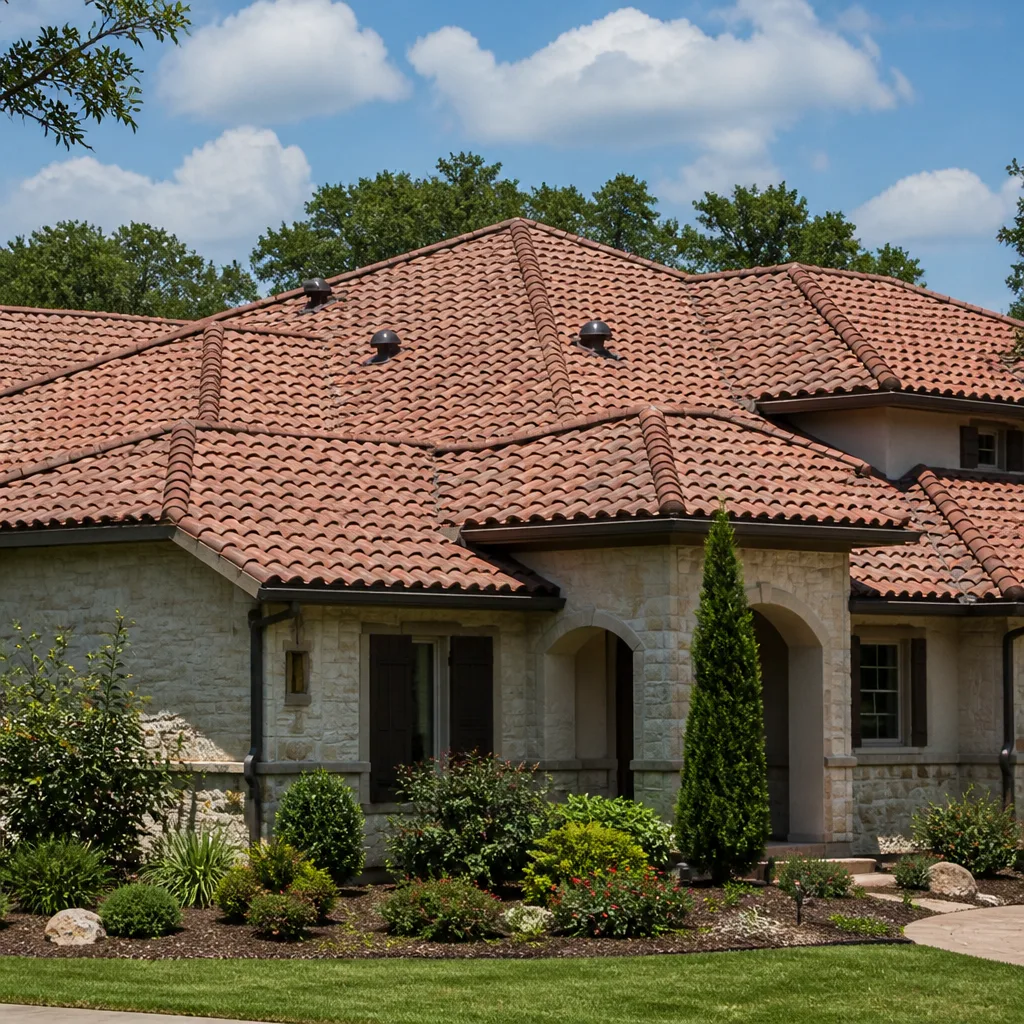 Tile roofing
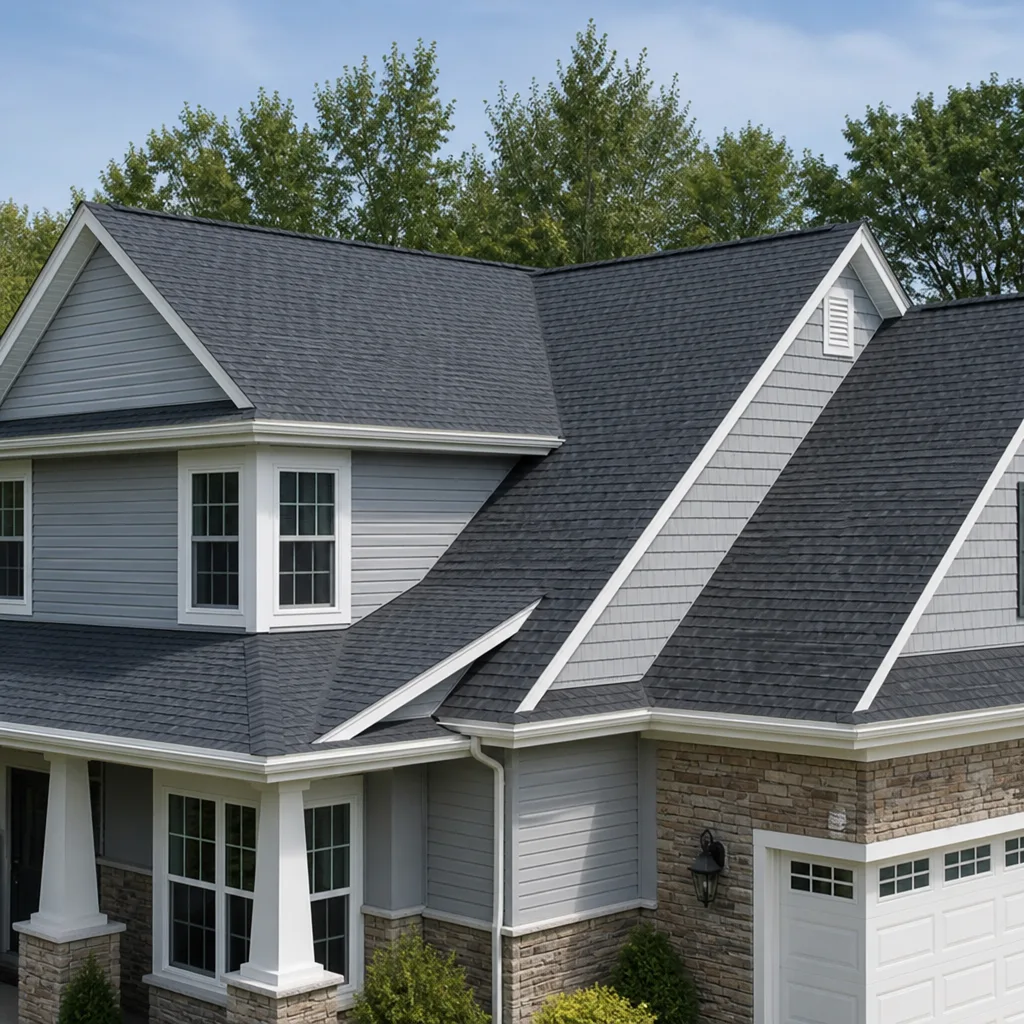 GAF
GAF Owens Corning
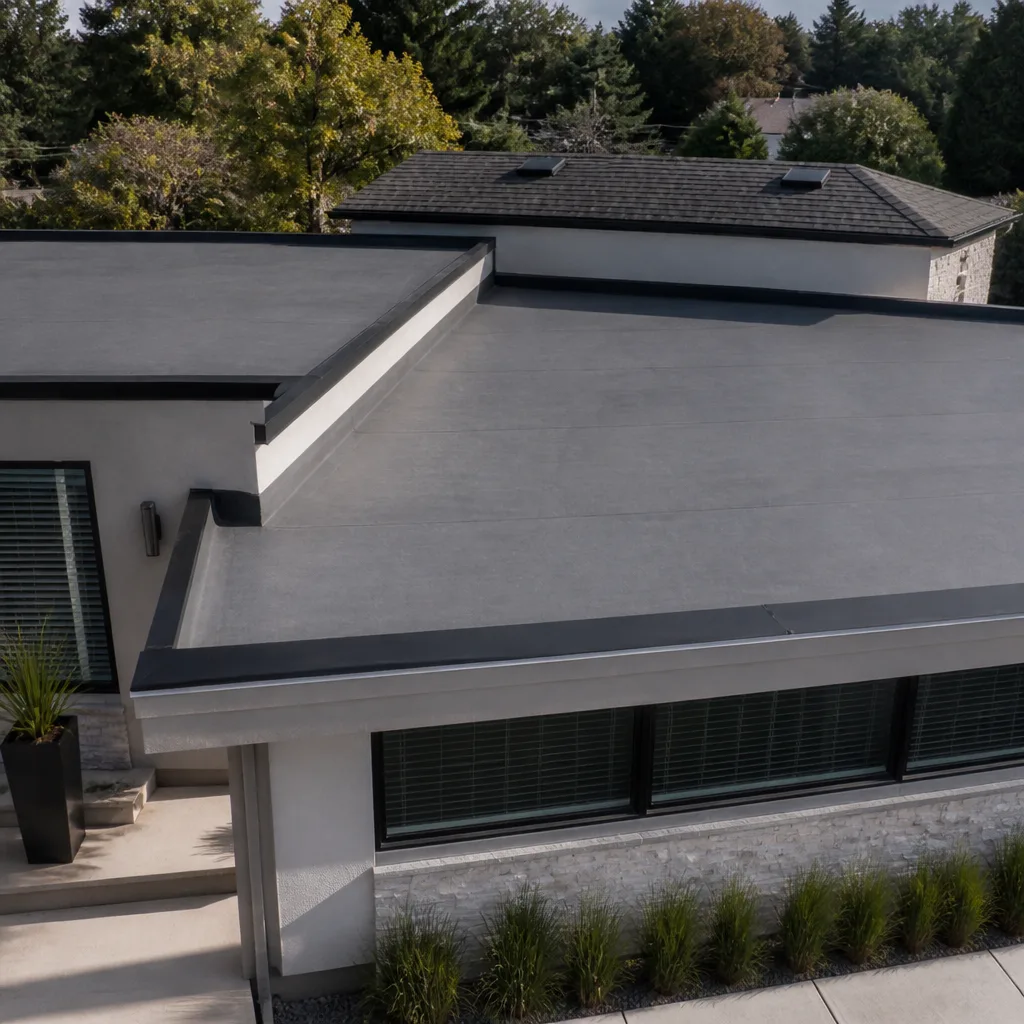 Flat & low-slope
Free roof inspection with deck photos before we talk money - GAF and Owens Corning certified installation
Roof Repair Maintenance Checklist for Miami Homeowners
The most expensive roof repair most Miami homeowners face isn’t storm damage. It’s the slow deterioration of mortar at tile ridges and hips that goes unnoticed for three years, then voids the insurance claim when a hurricane finally exposes it. Insurers send drones over Miami neighborhoods now, and they’re looking for exactly that: evidence of deferred maintenance. This guide is built around Miami’s actual failure modes, not a generic checklist that applies equally to Minneapolis and Phoenix. You’ll learn what to check each month, what you can safely do from the ground, what requires a licensed roofer, and how to document your roof so an insurance claim holds up when you need it. We’ve repaired thousands of roofs across Miami since 2000 through our Roof Repair services, and the pattern is always the same: small, catchable problems become expensive emergencies because nobody looked.
Styles & brands we work with
Quick Answer
A Miami roof maintenance checklist should be organized around the three events that actually drive roof failure here: hurricane season (June through November), persistent 80% humidity that feeds mold and algae, and the daily UV exposure that breaks down sealants and flashing. The essential tasks are checking ridge cap mortar in late winter, clearing debris from valleys and scuppers before June, inspecting flashing at AC curb penetrations each spring, documenting everything with dated photos, and knowing the difference between a maintenance item and a repair. Most homeowners can handle the photo documentation and ground-level visual checks; anything requiring a ladder against the roofline or actual contact with roofing material should involve a licensed professional.
Table of Contents
- Why Miami Roofs Fail Differently
- The Month-by-Month Miami Maintenance Calendar
- Tile Ridge and Hip Mortar: The Neglected Killer
- Flashing Checkpoints Unique to Miami Homes
- Documentation That Holds Up in a Claim
- What You Can Do vs. What Needs a Licensed Roofer
- When Maintenance Crosses Into Repair: Cost Thresholds
- Common Mistakes to Avoid
- When to Call a Professional
- Frequently Asked Questions
- The Bottom Line
Why Miami Roofs Fail Differently
A roof in Miami faces conditions that don’t exist anywhere else in the continental U.S. in the same combination. The three forces that destroy roofing material here are wind uplift from tropical systems, sustained humidity above 75% for most of the year, and intense UV radiation that degrades sealants and asphalt compounds faster than in any major city except Phoenix. Each force attacks a different part of the roof, which means a maintenance checklist has to be specific to Miami, not borrowed from a national template.
Wind uplift is the one most homeowners think about, but it’s not the most common failure we see. When wind gets under the edge of a shingle or tile, it creates negative pressure that peels material upward. Miami-Dade County has the strictest wind-load building code in the country for this reason. But the roofs that fail in storms are rarely the ones with sound material. They’re the ones where mortar has crumbled from ridge caps, or where flashing has oxidized and separated at a penetration point, or where a soffit screen has been missing for two years and let wind-driven rain into the attic. A hurricane doesn’t create new weaknesses; it exploits existing ones.
Humidity is the slow killer. Miami’s ambient moisture keeps the underside of a roof deck damp for months at a time. Mold and mildew colonize the north-facing slopes where the sun doesn’t dry things out, and algae streaks work their way under the edges of shingles where they compromise the adhesive strip. We see algae bloom on north-facing slopes in Coral Gables, Pinecrest, and Coconut Grove more than anywhere else because the canopy cover keeps those roofs shaded. Algae isn’t just cosmetic once it grows under a shingle edge; it holds moisture against the decking and shortens the life of the entire system.
UV exposure is the third variable. Miami sits at a latitude where the sun’s angle is intense almost year-round. Sealants around vents, pipes, and flashings dry out and crack in 24 to 36 months in this climate, where the same material might last five years in the Northeast. This is why a Roof Repair in Miami almost always involves resealing penetrations, even when the primary problem was something else. The sun has a head start on every other failure mode.
The Month-by-Month Miami Maintenance Calendar
Miami doesn’t have four seasons, but it has a roof-maintenance rhythm that follows the storm calendar and the wet-dry cycle. Here’s how a full year breaks down, month by month, for a homeowner who wants to stay ahead of problems rather than react to them. For more guides & resources, see our blog.
January and February: Ridge Cap and Mortar Inspection Window
This is the driest period of the year, which makes it the best time to have a contractor assess ridge cap mortar. The mortar that holds tile ridge caps and hip caps in place is the most common point of major failure on Miami tile roofs. When it cracks and falls away, the ridge cap becomes a loose projectile in the first tropical storm. In January, the roof is dry enough to walk if conditions are safe, and a contractor can see the full extent of any deterioration without mud obscuring the joints. We recommend a visual inspection from a ladder or drone every January, with hands-on repair scheduled before March.
March and April: Pre-Season Fastener and Gutter Check
By mid-April, the spring rains have usually started, and you want everything water-tight and debris-free before the first named storm. March is the month for:
- Clearing gutters, scuppers, and downspouts of the leaf litter that accumulated over the mild winter
- Checking that gutter fasteners are still holding tight against the fascia
- Walking the yard to look for roof debris, lifted shingle corners, or tile fragments
- Scheduling any deferred repair work before the summer heat and storm season make it urgent
April is the last good window for roof maintenance in Miami. Once the humidity climbs in May and the afternoon thunderstorms start, a dry repair window gets harder to find.
May: Full Pre-Season Assessment
May is your final pre-hurricane-season checkpoint. Walk the property and document the condition of every visible roof surface with your phone camera. Check the soffit screens for gaps where insects or rodents could enter. Look for signs of algae on north-facing slopes. If you see any loose ridge cap tiles, cracked flashing, or areas where sealant has pulled away from a vent pipe or AC curb, schedule a repair before June. Insurers are increasingly doing pre-season drone flyovers, and a documented, maintained roof is your best position if a storm does arrive.
June through August: Mid-Season Rapid Checks
Once hurricane season is active, the maintenance mindset shifts. Your job is not to fix things; it’s to spot changes early. After every significant wind event or severe thunderstorm, do a ground-level walkaround. Look for:
- Tiles or shingle tabs in the yard or on the driveway
- Visible debris accumulation in valleys
- Water stains on the ceiling inside the house
- Loose flashing around the chimney or AC curb
Mid-August is a good moment for a mid-season professional check if you haven’t had eyes on the roof since spring. The peak of hurricane activity in Miami is still ahead, and by August the sun has had months to degrade seals and fasteners.
September and October: Peak-Storm Vigilance
Statistically, September is the most dangerous month for Miami roofs. The ground is saturated, the air is unstable, and the Atlantic is at its warmest. Maintenance during this window is limited to what can be done safely from the ground or with a drone. If a storm passes within 100 miles, do a documented walkaround within 48 hours. Photograph everything, even if nothing looks wrong. Those photos become evidence if you later discover wind-related damage that developed slowly.
November: Post-Season Assessment and Insurance Documentation
November is the single most important month for roof documentation in Miami. The season is winding down, and this is when insurers process the majority of wind and water claims. Take a full set of dated photos from every angle you can access. Note any changes from your May baseline photos. If you’ve had a contractor out during the year, request a written summary of anything they observed, even if no repair was performed. A one-page note that says “ridge cap mortar showed minor cracking, recommended monitoring” is worth its weight in an insurance negotiation.
December: The Quiet Month
December is for one thing: scheduling next year’s inspection. The holidays are quiet, the roof is dry, and contractors in Miami are easier to book. Get your January ridge cap inspection on the calendar now, because the good ones fill up by mid-January.
Tile Ridge and Hip Mortar: The Neglected Killer
We called this out in the opening because it’s the single most expensive maintenance failure in Miami that almost no homeowner checks. Tile roofs, which cover a majority of homes in Miami, use a mortar cap to secure the ridge and hip tiles at the peaks and corners. That mortar is sun-baked, rain-soaked, and wind-pounded for years. Eventually it cracks. Then it spalls. Then it falls out entirely.
Once the mortar is gone, the ridge cap tiles are sitting on the ridge with nothing holding them down except their own weight and friction. The first strong wind gust gets under the edge and lifts them. In a tropical storm, a loose ridge cap becomes a missile. And when the storm is over, the insurance adjuster’s drone photos will show missing mortar and loose tiles, which the insurer will use to argue that the damage was pre-existing and maintenance-related, not storm-related. You lose twice: once in the storm, once in the claim denial.
What to Check
- Look at the ridge line from the ground with binoculars or a camera zoom. You’re looking for gaps in the mortar, cracks running laterally, or dark streaks where water has been running under the cap.
- Check the hip lines, the diagonal ridges where two roof planes meet. These see more water flow than the main ridge and often fail first.
- After any significant wind event, walk the yard and look for pieces of mortar or tile fragments. Mortar chunks in the grass are a clear sign the ridge cap is actively shedding material.
- If you can see daylight under any ridge cap tile from an upstairs window, call a contractor that week.
What It Costs
Repointing ridge cap mortar on a typical Miami tile roof runs between $800 and $1,800, depending on the linear footage of ridge and hip, the accessibility from a ladder or scaffold, and whether any replacement tiles are needed. If the mortar has been gone long enough that the underlying fasteners have rusted or the tiles have moved, expect to add $200 to $600 per replacement tile. This is a modest cost compared to the $15,000 to $40,000 that a full Roof Installation in Miami costs after a storm strips the ridge and the insurance claim is denied.
Flashing Checkpoints Unique to Miami Homes
Flashing is the metal material that seals the joints where the roof meets an obstruction: a chimney, a plumbing vent, an AC curb, a skylight, a wall. In Miami’s salt air and humidity, flashing fails faster than in inland cities. The specific checkpoints that matter most on a Miami roof are not the ones you’ll find on a national checklist.
AC Curb Penetrations
Miami homes have rooftop air conditioning units or the metal curbs that hold them, often positioned near the center of the roof. The flashing where the curb meets the roofing material is a prime failure point. The constant cycling of the AC unit creates vibration that works the flashing loose over time. Add Miami’s humidity, which accelerates oxidation of the metal, and the result is a slow leak that can run inside the curb and into the attic before you ever see a ceiling stain. Check this flashing every March, looking for rust streaks, sealant that has pulled away from the metal, or a visible gap between the flashing and the curb.
Soffit Screen Integrity
The soffit, the underside of the roof overhang, is ventilated with screens that let the attic breathe. In Miami, those screens are a wildlife highway. Iguanas, rats, bats, and birds all seek entry through damaged soffit screens. Once inside, they nest in the insulation, chew through wiring, and their droppings create odors that are hard to remove. A missing soffit screen is not an aesthetic problem. It’s a structural and health problem. Check the soffits every May and November. Any screen that is torn, sagging, or pushed inward needs replacement. This is a ground-level check with binoculars, no ladder required.
Algae Bloom on North-Facing Slopes
Algae, most commonly the blue-green variety Gloeocapsa magma, thrives on the north-facing roof slopes of Miami homes where shadow and humidity combine. The algae feeds on the limestone filler in asphalt shingles and holds moisture against the surface. Once it colonizes the underside of a shingle tab, it accelerates the loss of the adhesive strip and shortens the roof’s life. We see this most often in the tree-canopied neighborhoods of Coconut Grove, Coral Gables, South Miami, and Palmetto Bay. An algae bloom is not a maintenance emergency, but it’s a maintenance signal. If you see dark streaks spreading on a north slope, the roof is not drying out, and the material is aging faster than its calendar age suggests.
Chimney and Wall Step Flashing
Miami’s frequent wind-driven rain means water doesn’t always fall vertically. It hits the roof at an angle, and it finds its way under flashing that a vertical-only rainfall would never find. Step flashing, the folded metal pieces that weave into the shingle courses along a wall or chimney, is particularly vulnerable in Miami because the rain exposure is from multiple directions. Check the step flashing for gaps, lifted edges, or sealant failure during every pre-season assessment. The telltale sign of step flashing failure is a water stain on the ceiling that appears a few feet from the wall, not directly against it, because the water travels horizontally along a rafter before it drips.
Documentation That Holds Up in a Claim
The single best thing any Miami homeowner can do for their roof is not a physical repair. It’s the discipline of documentation. Insurers and their adjusters are not on your side during a claim. They’re looking for reasons to classify damage as pre-existing, maintenance-related, or cosmetic. Without dated photos and a paper trail, you’re arguing from memory. With them, you’re arguing from evidence.
The Photo Protocol
- Establish a baseline each May. Take at least 20 photos: ridge lines, hip lines, all flashing points, soffits, valleys, and a few wide shots from each compass direction. Use a date stamp if your camera app offers one, or include something in the photo that establishes the date, like the front page of that day’s Miami Herald.
- Photo after every event. Any storm, any wind event over 40 mph, any hail report within 10 miles. Document what the roof looked like within 48 hours. The comparison between your May baseline and your post-storm photos is what an adjuster can’t argue with.
- Keep a written log. One line per entry: date, weather event, what you observed, what you did. No narrative needed. The log is evidence of steady maintenance, which is exactly what an insurer wants to see when they’re deciding whether to honor a claim.
- Keep contractor reports. Every time a roofer inspects or repairs your roof, request a written summary of observations, even when no repair is performed. That one-page note is gold in a dispute.
What Not to Do
Do not rely on a real estate listing photo as your baseline. Do not rely on the insurance adjuster’s drone footage to tell the whole story. Do not throw away receipts or inspection summaries. Do not let a year pass without documenting the roof. In a dispute, the homeowner who can show a five-year history of photos and notes wins more often than the one who can’t.
What You Can Do vs. What Needs a Licensed Roofer
There’s a line between maintenance and repair, and it matters for two reasons. First, your safety. Roofs are dangerous, especially tile roofs in Miami where the surface is steep, brittle, and often wet. Second, your warranty and insurance standing. Many manufacturer warranties on GAF, Atlas, and Tamko materials are voided if unlicensed work is performed on the roof. And if a homeowner makes a repair themselves and the roof later fails, the insurer may use that as grounds to deny a claim.
Safe to Do From the Ground
- Binocular inspection of ridge caps, flashing, and soffits
- Walking the yard after storms to look for debris, tile fragments, or shingle tabs
- Clearing the storm drains and ground-level scuppers
- Documenting the roof with photos from multiple angles
- Checking the inside of the attic for water stains, daylight through the deck, or pest evidence
Leave to a Licensed Roofer
- Anything that requires a ladder against the roofline or walking on the roof surface
- Repointing ridge cap mortar
- Resealing or replacing flashing at any penetration
- Replacing shingles, tiles, or underlayment
- Any work at a height above one story
- Any inspection that requires moving tiles to see the underlayment
The distinction matters for liability. If you get on a ladder with a caulking gun and reseal a vent pipe, and the work fails and water damages your ceiling, the repair cost is on you. If a licensed contractor does the same work and it fails, their license, their insurance, and their warranty are on the hook. We include a written guarantee on every repair, with a free second visit if the fix doesn’t hold. That’s the protection a homeowner can’t get from a DIY patch.
When Maintenance Crosses Into Repair: Cost Thresholds
There comes a point where chasing individual fixes costs more than replacing a section of roof, and recognizing that point is one of the most valuable skills a Miami homeowner can develop. The rule of thumb we use with our own clients is simple: if you’re spending more than 20% of the cost of a replacement on repairs in a single year, and the roof is more than 15 years old, start planning for replacement. See our Roofing Cost Breakdown: The Miami Homeowner’s Reference for 2026 for detailed pricing. Do the maintenance that keeps the roof safe and functional in the meantime, but don’t sink money into an aging system that will need replacement within a few years anyway.
Repair vs. Replace: What the Numbers Say
A single flashing repair at an AC curb runs $250 to $500. A single ridge caps repointing job runs $800 to $1,800. Replacing a few broken tiles runs $150 to $400. Individually, these are reasonable maintenance costs. But if you’re paying for flashing repairs in March, ridge work in April, and a leak repair in August, you’re at $2,000 to $3,500 in a single year. At that point, on a roof that’s 18 years old, you’re spending money on a system that has already served most of its useful life.
A full Roof Installation in Miami on a typical single-family home costs between $12,000 and $35,000, depending on the roofing material. A tile roof replacement is at the higher end. An asphalt shingle replacement using GAF or Atlas materials is at the lower end. When the annual repair spend approaches 20% of that replacement cost, and the roof is past its warranty period, the smart money goes into replacement, not patching. The math is even more compelling when you consider that a new roof in Miami-Dade County comes with a wind mitigation inspection credit that can reduce your insurance premium by hundreds of dollars per year.
Common Mistakes to Avoid
- Ignoring ridge cap mortar until a storm exposes it. The most common and most expensive mistake we see in Miami. If the mortar is cracked, fix it now. The cost of repair is a fraction of the cost of a denied insurance claim.
- Using a generic maintenance checklist from a national website. A checklist written for a shingle roof in Ohio tells you nothing about ridge cap mortar, AC curb flashing, or wind uplift in Miami. Your roof has a different set of threats.
- Skipping documentation because nothing “looks wrong.” Photos of a healthy roof are still valuable. They’re your baseline. Without them, you have no comparison point when something does go wrong.
- Getting on a ladder without fall protection. A fall from even a single-story roof can cause life-changing injury. The saving from a DIY repair is not worth the risk, and the warranty and liability implications make it even worse.
- Waiting until hurricane season starts to schedule repairs. Roofers in Miami are booked weeks out once the season starts. The time to repair is January through April, when the weather is dry and contractors have availability.
- Patching a roof that’s past its service life. There’s a point where repairs stop being economical. If your roof is over 18 years old and you’ve had two or more repairs in the past year, get a replacement quote before the next repair need appears.
- Hiring the first roofer who knocks on your door after a storm. Miami sees a wave of out-of-town roofing crews after every hurricane. They arrive, collect deposits, and disappear. Choose a Roofing Company in Miami with a local address, a verifiable license, and a written price before any work starts.
When to Call a Professional
Call a licensed roofer if you see cracked or missing mortar at a ridge cap, flashing that has oxidized or separated at any penetration, water stains on the ceiling, or loose tiles in the yard after a storm. Call if your roof is over 15 years old and hasn’t had a professional inspection in two years. Call if the attic smells musty, which often indicates a slow leak that hasn’t surfaced yet. And call if a storm has passed and you suspect wind damage, even if nothing is visibly wrong. Mercer Roofing Co Miami home offers free estimates throughout Miami. Every assessment starts with a written price before any work begins, and every repair comes with a written 365-day guarantee. Call (850) 753-2996.
Frequently Asked Questions
A Miami roof should be professionally inspected at least once a year, in late winter or early spring, before hurricane season begins. Homes over 15 years old, homes with tile roofs, and homes in high-canopy neighborhoods like Coconut Grove or Coral Gables benefit from a second inspection in November after the season ends.
A basic roof inspection in Miami typically costs between $150 and $400, depending on the roof type, the contractor, and whether the inspection includes drone footage or moisture scanning. Many roofing companies, including Mercer Roofing Co Miami, waive the inspection fee when the assessment leads to a repair or replacement job.
You can safely do ground-level documentation, visual checks with binoculars, storm debris cleanup, and attic inspection. Anything that requires a ladder against the roofline, walking on the roof surface, or touching roofing material should be left to a licensed roofer. Manufacturer warranties and insurance claims can both be voided by improper DIY work.
A well-maintained tile roof in Miami lasts 40 to 50 years for the tile itself, but the underlayment beneath it typically needs replacement at the 20 to 25 year mark. The ridge cap mortar is the weak point and often needs repointing every 10 to 15 years. A badly maintained tile roof can fail in half its expected lifespan.
Potentially, yes. Miami-Dade County insurers increasingly offer discounts for homes that pass wind mitigation inspections and maintain their roofs in documented good condition. A maintained roof with a recent inspection report can reduce your premium by several hundred dollars per year. The reverse is also true: a deferred maintenance finding can raise your premium or make you uninsurable with some carriers.
Repointing ridge cap and hip mortar on a typical Miami tile roof costs between $800 and $1,800, depending on the linear footage and accessibility. If replacement tiles or rusted fasteners are involved, the cost can push higher. Compared to the cost of a denied insurance claim after a storm, it’s the cheapest protection a tile roof homeowner can buy. Call (850) 753-2996 for an exact quote.
The Bottom Line
A Miami roof fails for reasons a generic checklist never mentions: ridge cap mortar crumbling in silence, AC curb flashing oxidizing in salt air and humidity, soffit screens letting wildlife into the attic, and algae feeding on north-facing slopes. The maintenance calendar is simple: inspect ridge caps in January, clear gutters and check flashing in March, document everything in May, stay vigilant through hurricane season, and do a full photo assessment in November. Most of the checklist is doable from the ground with a phone camera and a pair of binoculars. Everything else, including anything that touches the roof surface, belongs to a licensed roofer who puts the price in writing before work starts and stands behind the repair with a written guarantee. Be sure you understand Roofing Permits, Codes & Inspections in FL: What You Need to Know before any work begins. That’s the maintenance discipline that keeps a Miami roof standing through whatever the Atlantic sends next.
Written by Grant Whitlock, Owner at Mercer Roofing Co Miami, serving Miami since 2000.
See the difference
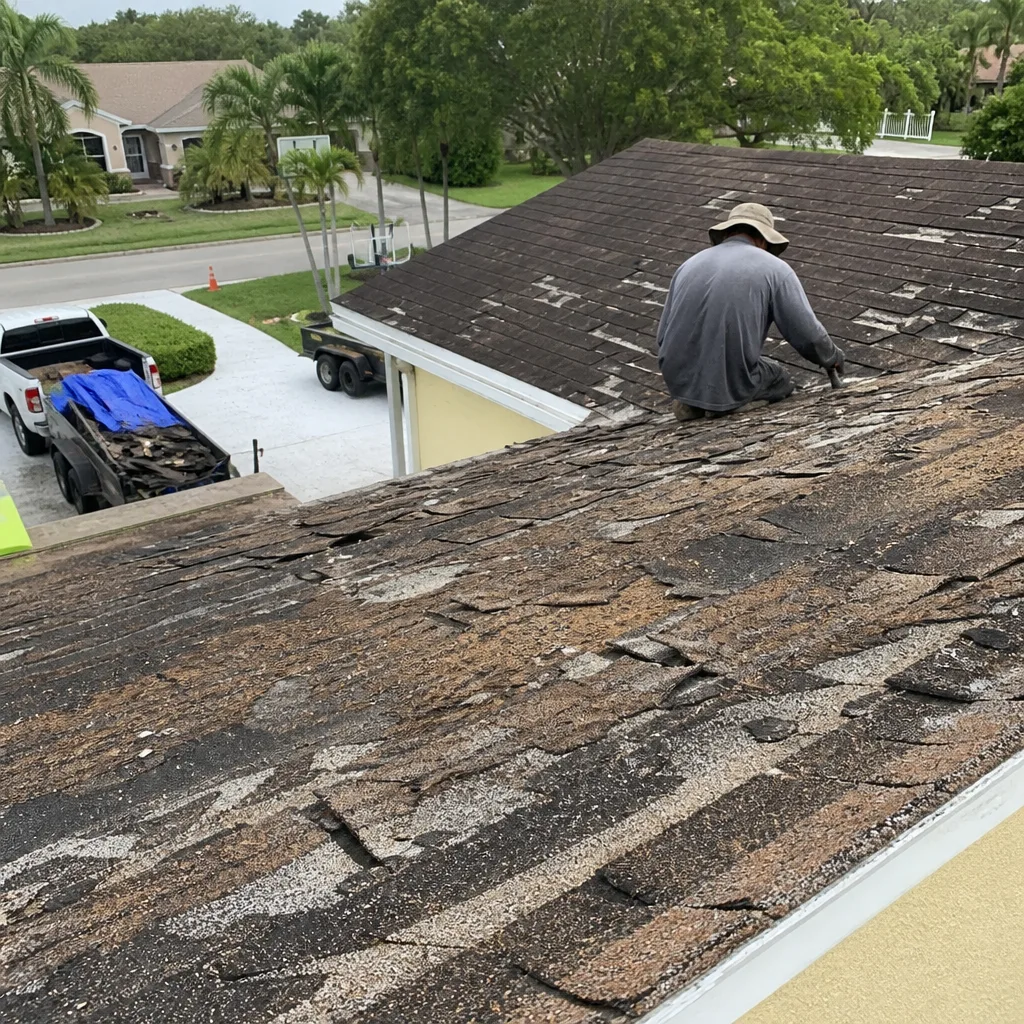 Before
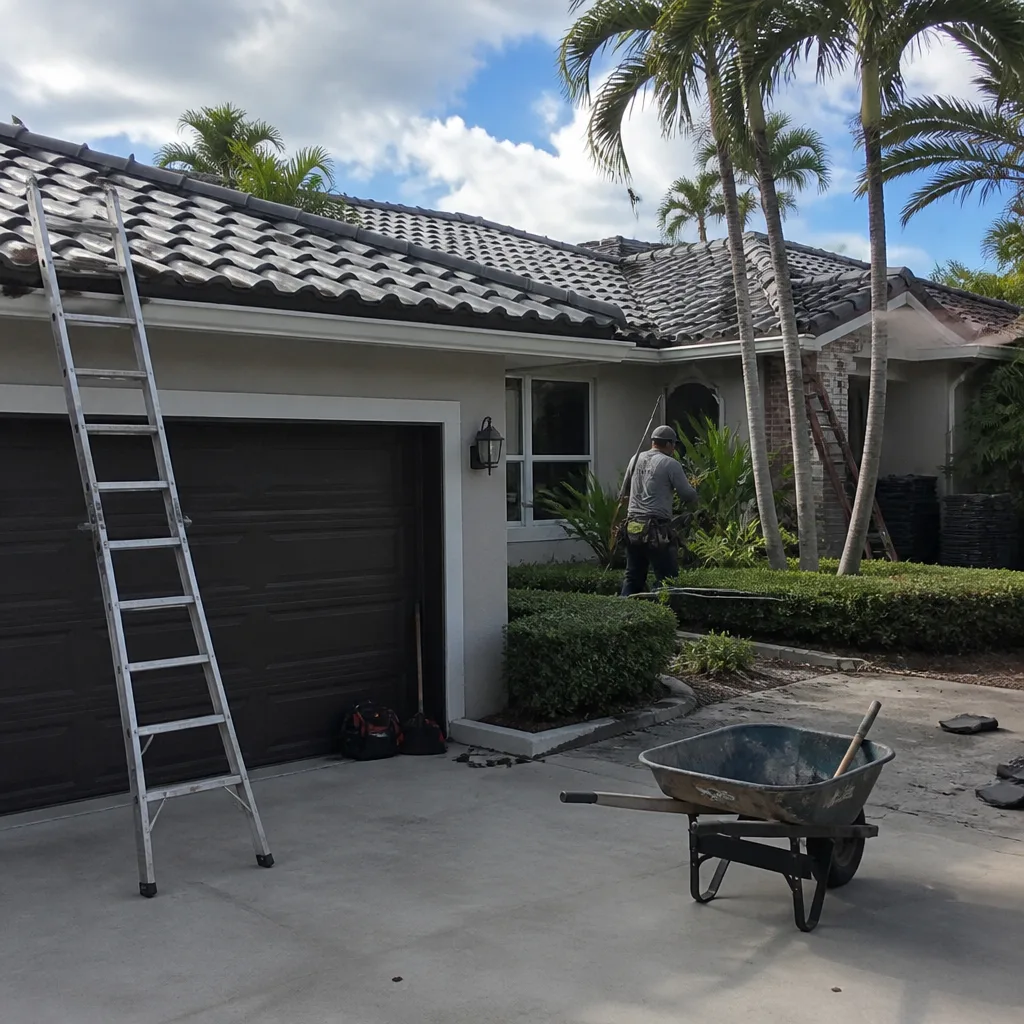
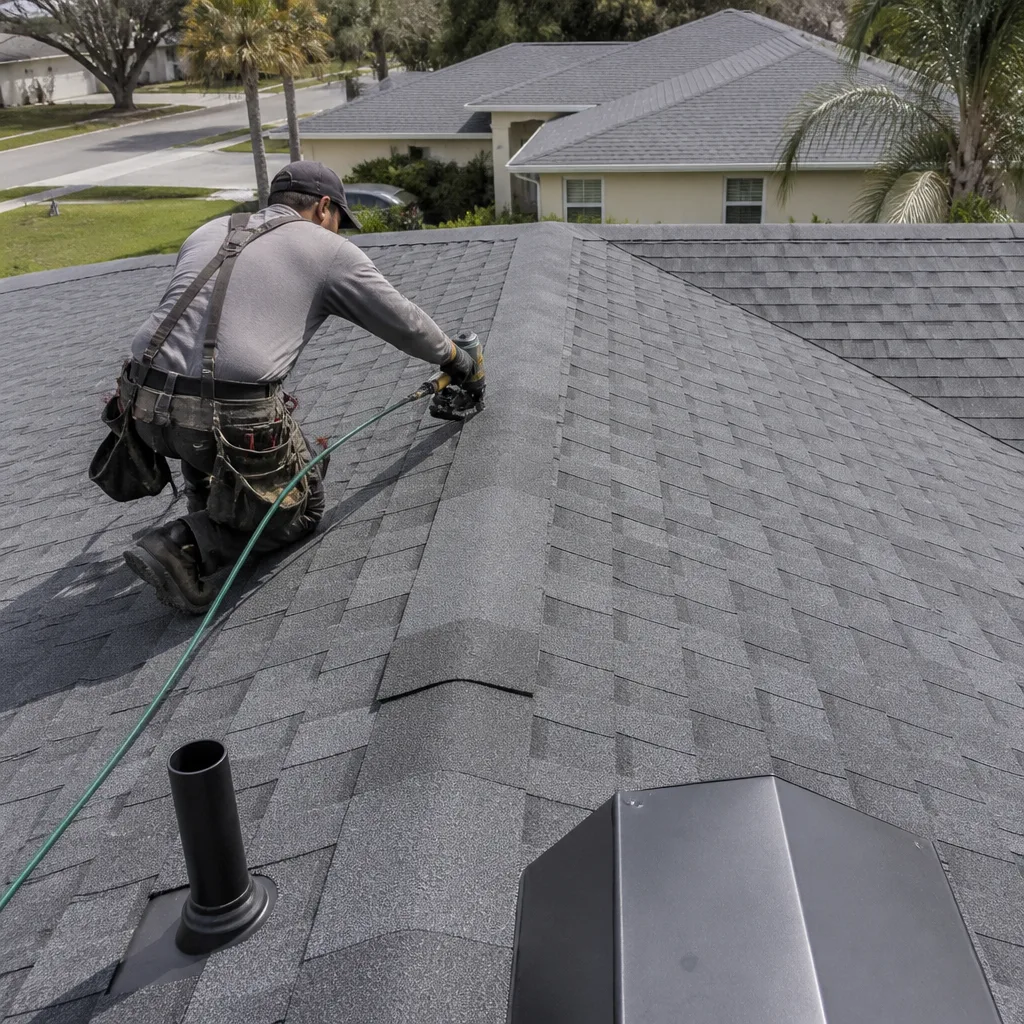
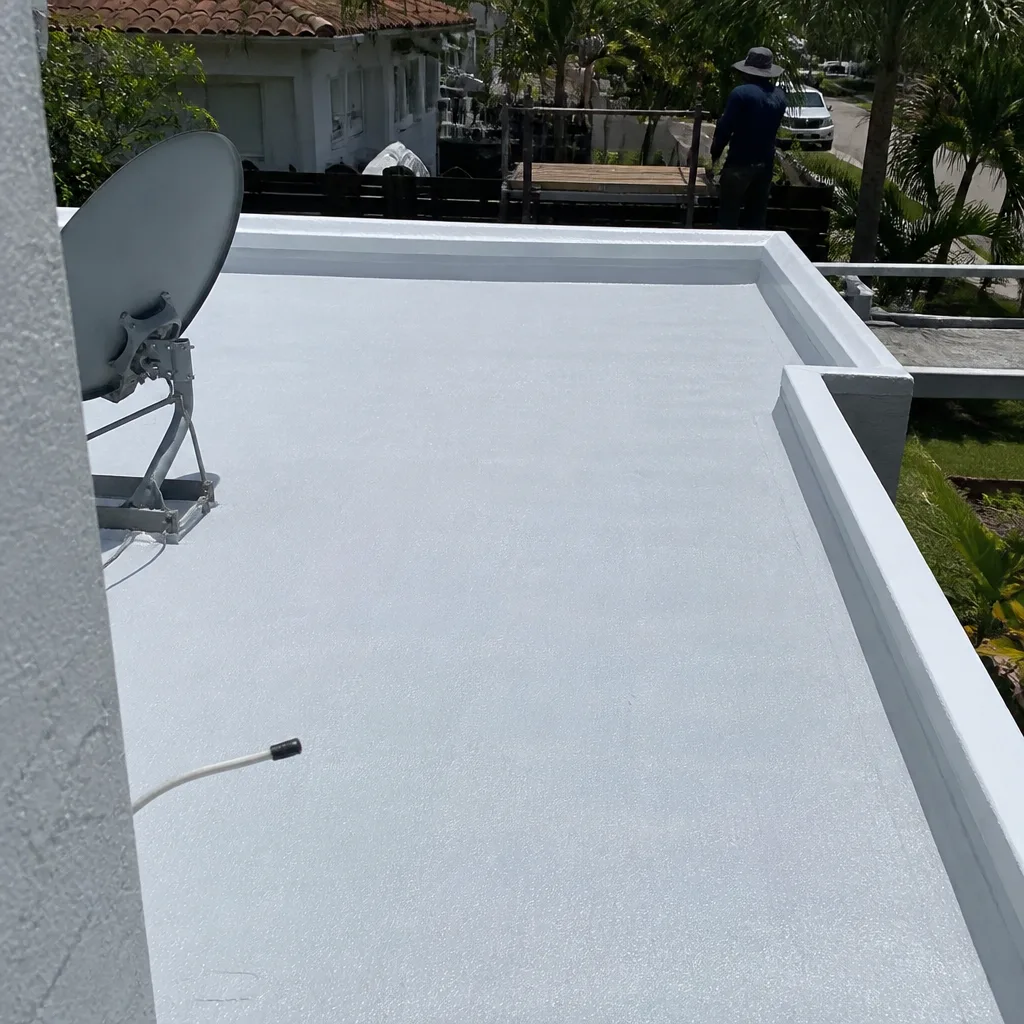 After
After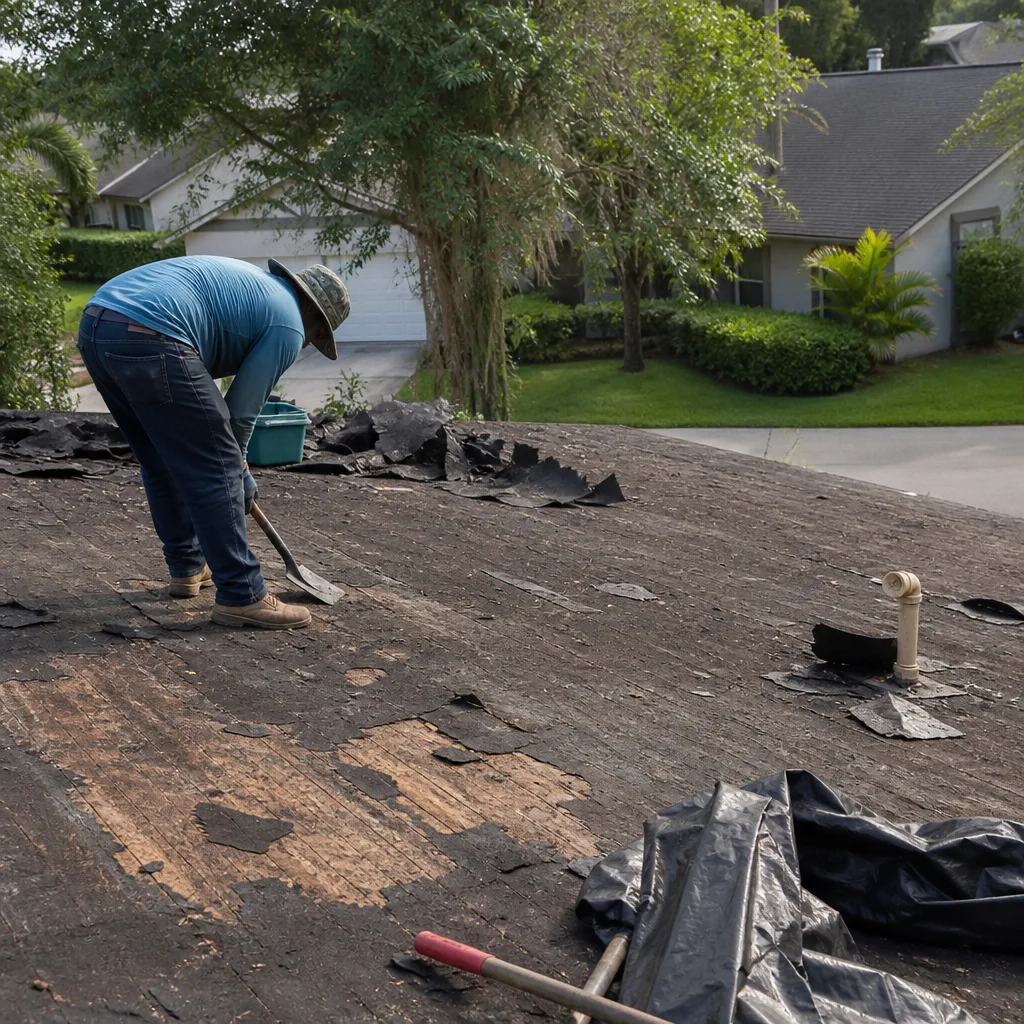 Before
 After
After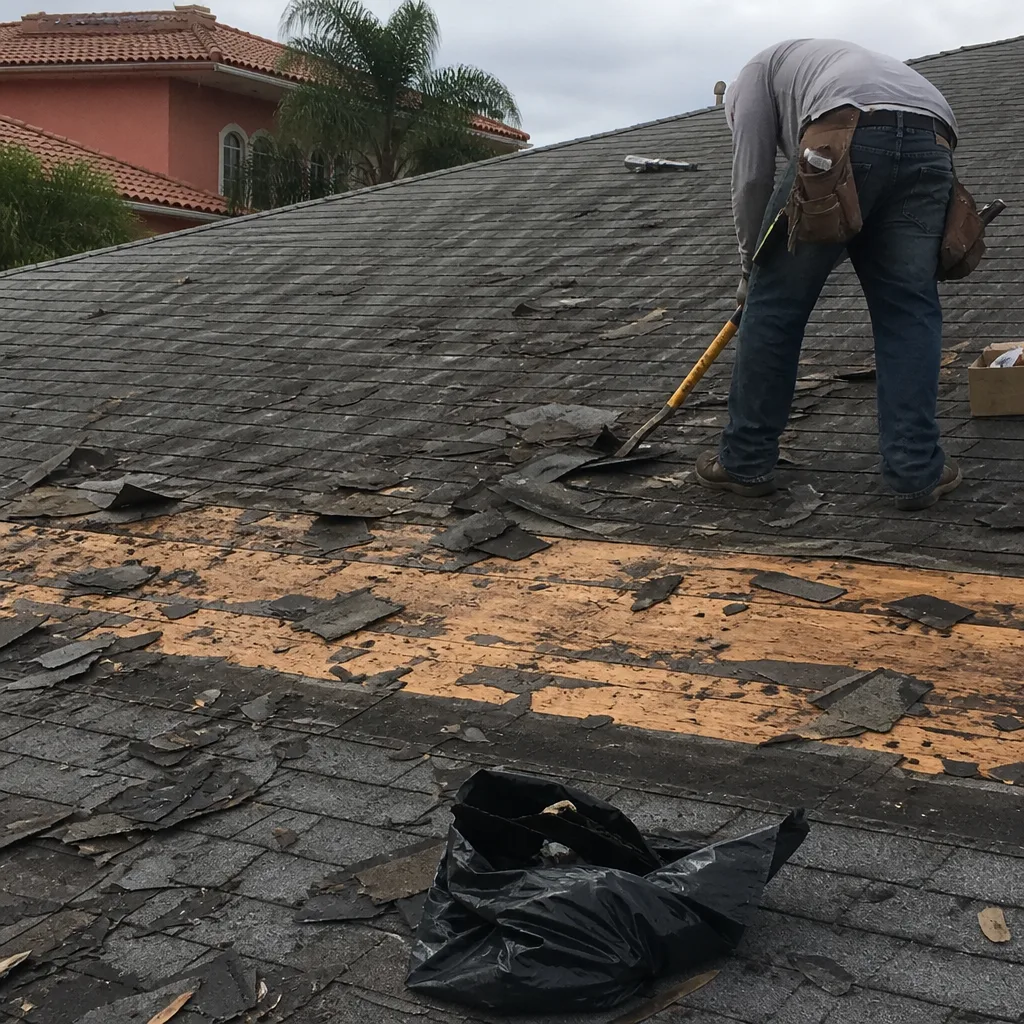 Before
 After
After