
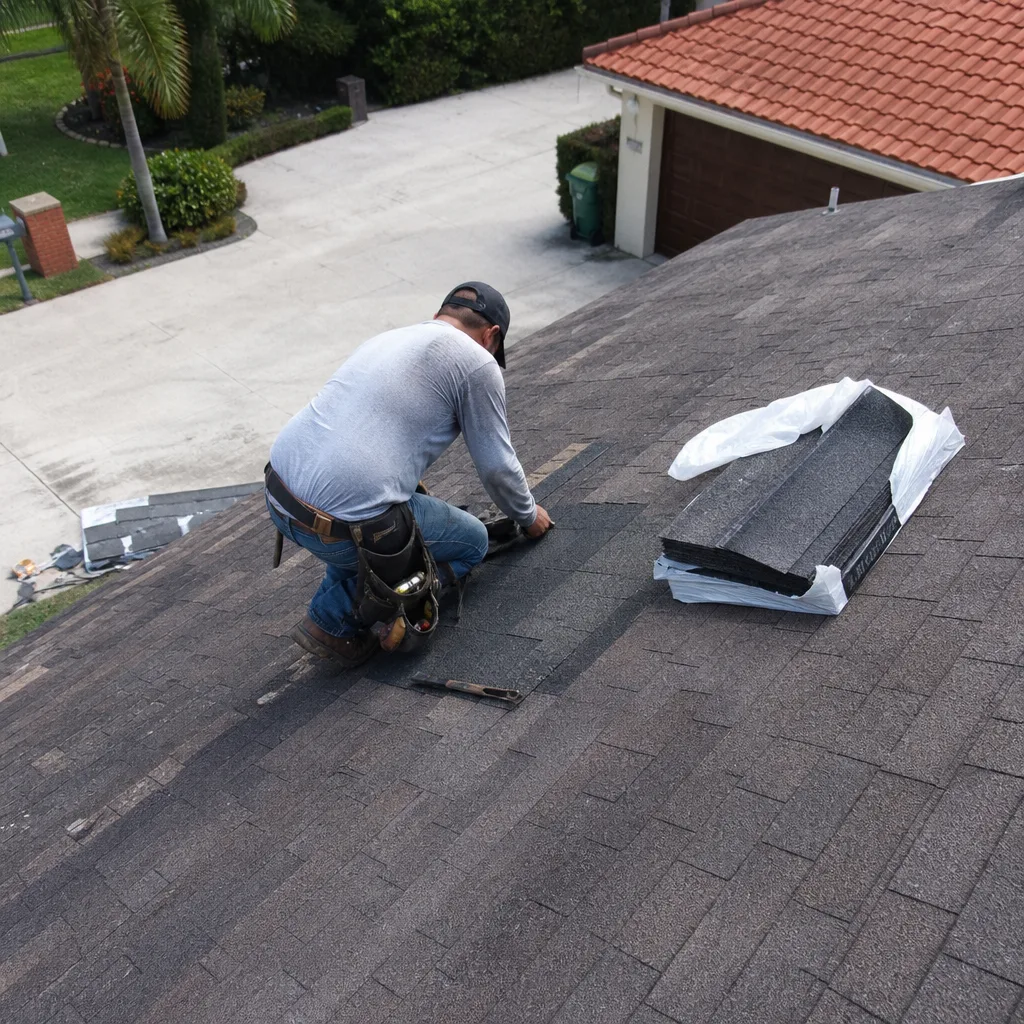
Last updated October 17, 2026
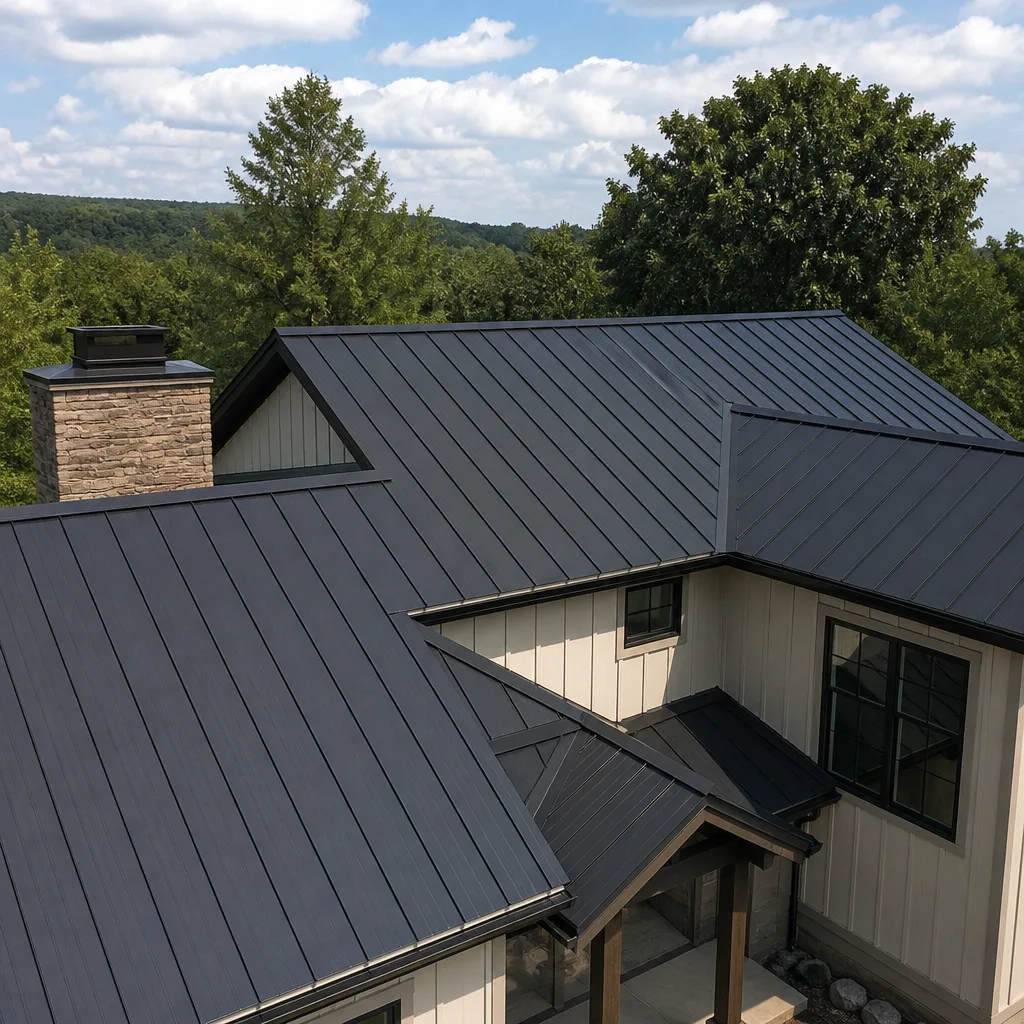 Metal roofing
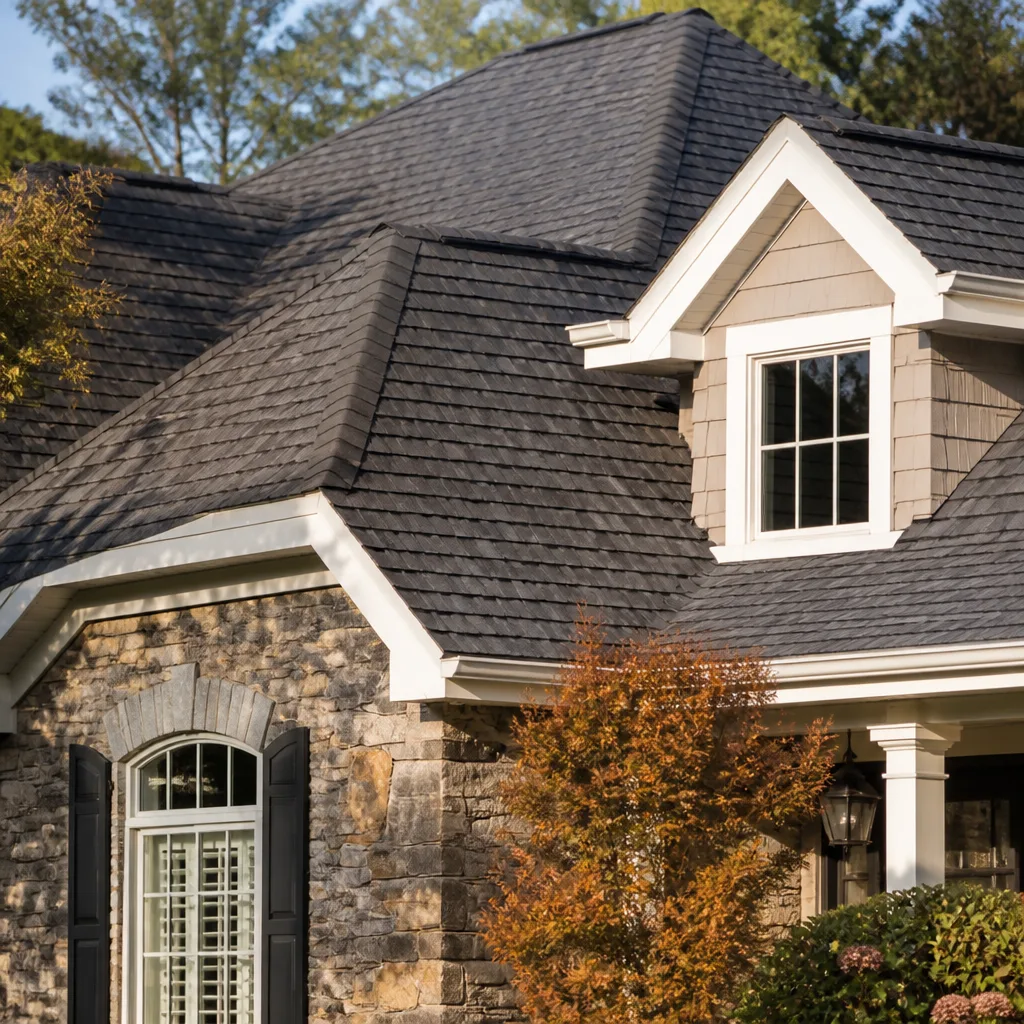 Architectural shingles
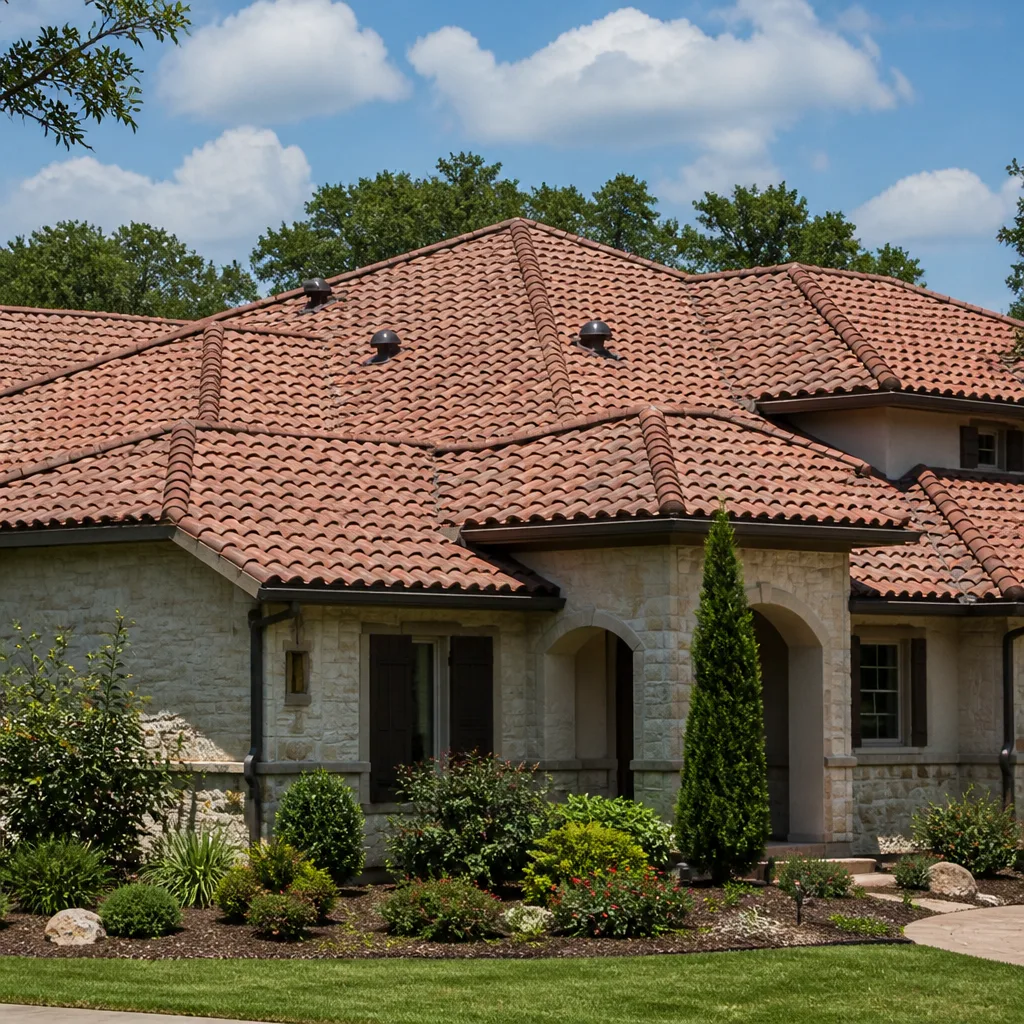 Tile roofing
 GAF
GAF Owens Corning
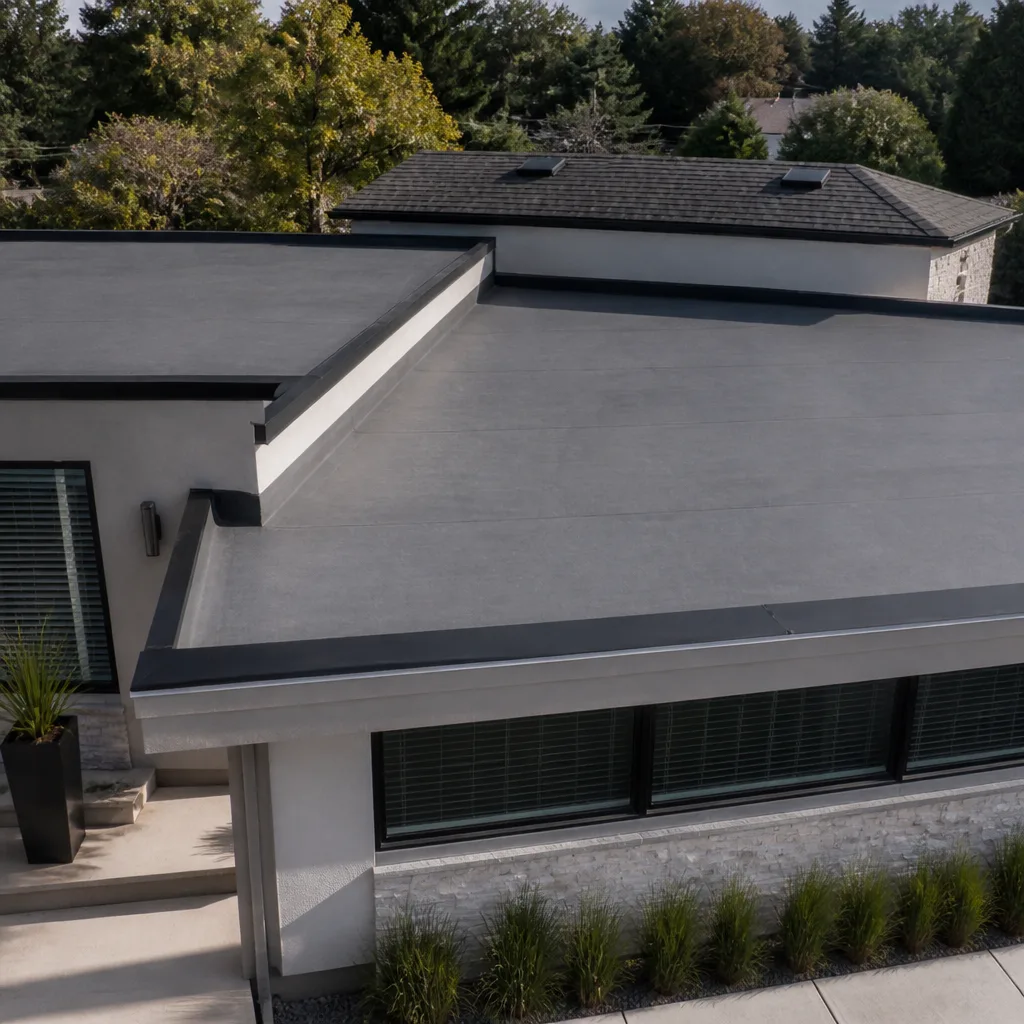 Flat & low-slope
Free roof inspection with deck photos before we talk money - GAF and Owens Corning certified installation
How to Hire a Roofing Contractor in Miami: A Step-by-Step Guide
After Hurricane Irma, Florida’s Department of Business and Professional Regulation logged more than 4,000 complaints against unlicensed contractors in a single year. Roofing topped the list. Most victims told investigators the same thing: the contractor “seemed professional” when they knocked on the door. Miami sees this pattern repeat after every storm, because our climate cycles through hurricane season every year and our housing stock includes hundreds of thousands of aging shingle roofs that need real attention. This guide walks through every step of hiring a roofing contractor in Miami, with the vetting questions most homeowners skip and the contract clauses that separate a legitimate operation from a storm chaser.
Quick Answer
To hire a roofing contractor in Miami, you need to verify the company’s Florida DBPR license, insist on a written contract with five specific clauses, confirm the contractor pulls their own permits, and get a written price before any work starts. Do this in order, every time, no exceptions. A contractor who resists any one of these steps is showing you who they are.
Styles & brands we work with
Table of Contents
- Step 1: Verify the Florida Roofing License Through DBPR
- Step 2: Ask Who Is Coming to Your Door
- Step 3: Get a Written Price Before Work Starts
- Step 4: Read the Contract Like a Miami Inspector
- Step 5: Confirm the Permit Is in the Contractor’s Name
- Step 6: Verify Insurance With a Certificate, Not a Claim
- Common Mistakes to Avoid
- When to Call a Professional
- Frequently Asked Questions
Step 1: Verify the Florida Roofing License Through DBPR
Florida requires any contractor performing roof work to hold an active license through the Department of Business and Professional Regulation, or DBPR. You can verify a license in under two minutes at myfloridalicense.com. Type in the company name or the individual’s name, and the portal shows the license number, type, status, and any complaints or disciplinary actions on file. What you want to see is a status of “Active” with no recent administrative complaints. An “Inactive,” “Suspended,” or “Null and Void” status means the contractor is not legally allowed to pull permits or perform work in Miami, regardless of what their business card says.
In our experience in Miami, maybe one in four homeowners who call us after a bad experience never checked the license at all. Some checked the wrong name, because the contractor gave a personal name that differed from the licensed entity. The DBPR portal shows the exact name on the license. If the person at your door doesn’t match the license holder, walk away. A legitimate roofing company in Miami will volunteer its license number before you ask. If you have to push for it, that’s your answer.
- Go to myfloridalicense.com and click “Verify a License.”
- Search by business name first, then by the individual’s full name.
- Check that the status says “Active” and the license type is Certified Roofing Contractor or Roofing Contractor, not General Contractor.
- Click the license number to open the full record. Look for complaints, citations, or disciplinary actions.
- Print or screenshot the record. Keep it with your contract file.
Miami-Dade County has some of the strictest building codes in the country, which means a license is not a technicality. An unlicensed roofer skipping code requirements can quietly void your homeowner’s insurance. The time you spend on the DBPR portal is the cheapest insurance you’ll ever buy.
Step 2: Ask Who Is Coming to Your Door
This is the step most guidance skips, and it’s the one that matters most to homeowners who are home alone during the day, have young kids, or simply don’t want a stranger walking around their property without knowing who they are. Before you schedule any roofing visit in Miami, ask the company a direct question: “Will I know the name of the technician before they arrive, and will they show ID at the door?”
A legitimate contractor should answer yes to both without hesitation. At Mercer Roofing Co Miami, every technician’s name and photo are sent to the homeowner before the visit. When the technician arrives, they present a photo ID badge at the door. They’re in a clean, marked uniform. They’re background-checked and identity-verified. This is the Threshold Verified standard, and it’s the baseline for how we operate at Mercer Roofing Co Miami home and every independently owned location in the Threshold Group family, founded in 2000.
If a contractor tells you “someone will be in the area” or “we’ll send a guy out,” that’s a vetting failure on your side. You should know the name, see the face, and have a written scope of work in hand before you open the door. A contractor who won’t tell you who’s coming usually has a reason they’d rather you not know.
Step 3: Get a Written Price Before Work Starts
In Miami, roofing prices vary by roof size, pitch, material, and the condition of the decking underneath. As of 2025, a full shingle roof replacement on a typical 2,000-square-foot Miami home runs roughly $11,000 to $19,000, depending on shingle brand and whether the old roof needs to be torn off. A roof repair, by contrast, might run anywhere from $350 for a small flashing fix to $2,500 or more for multiple leak points with rotted decking sections. Flashing repairs around chimneys and skylights are common in Miami because our intense sun and salt air degrade metal faster than inland climates.
What you want, before any work begins, is a written line-item price. Not a verbal ballpark. Not an estimate scribbled on a business card. A written document that breaks out materials, labor, disposal, and any decking replacement by the sheet. This is the single best protection against surprise invoices.
Here’s what that written price should include:
- Total project cost, with a clear breakdown of materials and labor
- Shingle brand and model specified by name, such as GAF Timberline HDZ or CertainTeed Landmark
- Number of squares being installed or repaired
- Cost per sheet for any decking replacement, quoted as a set price, not an open-ended hourly rate
- Disposal and haul-away fees
- Start date and estimated completion date
Every Mercer Roofing Co Miami job starts with a written price before any work begins. There’s no such thing as “we’ll figure it out as we go.” If a contractor can’t put the number in writing, they haven’t actually priced the job.
Step 4: Read the Contract Like a Miami Inspector
The contract is the most important document in any roofing job in Miami. It’s your only legal protection if the work fails, the crew disappears, or the invoice doesn’t match what you agreed to. Before you sign anything, make sure the contract includes these five clauses in writing. Not verbally. In the contract itself.
- Scope of work. A detailed description of exactly what will be done: tear-off or overlay, decking replacement, underlayment type, shingle brand and color, flashing replacement, ventilation, and cleanup.
- Materials specification. The exact manufacturer and product line for every component. “Architectural shingle” is not a spec. “Owens Corning Duration in Onyx Black” is a spec.
- Payment schedule. Florida law limits initial deposits for residential roofing contracts. You should never pay the full amount upfront. A common structure is a deposit to secure materials, with the balance due only after the work passes inspection.
- Permit responsibility. The contract must state that the contractor, not the homeowner, pulls the permit and schedules inspections. If the contract is silent on permits, that’s your signal to ask.
- Workmanship warranty terms. The contract should state what is covered and for how long. “We stand behind our work” is a slogan. “Workmanship covered for 365 days, including a free second visit if any repair fails” is a warranty. The 365-Day Done Right Promise at Mercer Roofing Co Miami is in writing on every job, and every repair carries a written guarantee with a free second visit if the repair doesn’t hold.
The five clauses above are non-negotiable. If any one of them is missing, do not sign. Ask the contractor to revise. A contractor who won’t put the terms in writing is telling you, in advance, how they’ll behave when there’s a problem.
Step 5: Confirm the Permit Is in the Contractor’s Name
Every roofing job in Miami that involves replacing, repairing, or altering the roof covering requires a permit from the Miami-Dade County Building Department or the local municipality. Here’s a fact most homeowners don’t realize: the person whose name is on the permit is the person legally responsible for the work. If a contractor asks you to pull the permit yourself, they’re telling you to put your name on their work. That makes you legally and financially responsible for any code violations, failed inspections, or injuries. This is almost always a red flag.
A legitimate roofing contractor in Miami pulls the permit in their own name, schedules the inspections, and meets the inspector on site. When the job passes final inspection, you get a copy of the sign-off. At Mercer Roofing Co Miami, we pull every permit ourselves. We’re on site when the inspector arrives. You receive the inspection results with your final paperwork.
If a contractor tells you “you don’t need a permit for this,” call the Miami-Dade County Building Department and ask directly. Some minor repairs like replacing a few shingles may fall under exemptions, but any reroof or structural repair does not. And if a contractor shrugs off the permit conversation entirely, that’s the end of the conversation.
Step 6: Verify Insurance With a Certificate, Not a Claim
Any roofing contractor working on your Miami home should carry general liability insurance and workers’ compensation coverage. The way to verify this is simple: ask for a certificate of insurance, or COI, issued directly by the insurance carrier, with you listed as the certificate holder. A COI shows the policy numbers, coverage limits, and effective dates. If a contractor says “we’re insured” but won’t produce a COI, assume they aren’t.
Workers’ compensation coverage matters in roofing more than almost any other trade. Roof work is high-risk. If an uninsured worker falls on your property, you can be pulled into a claim against your homeowner’s policy. General liability covers damage to your home, but workers’ comp is what protects you from the human injury side. Florida law requires roofing contractors with employees to carry workers’ compensation. Ask to see the COI, then call the insurance carrier to verify the policy is active. It takes five minutes.
In Miami, where hurricane damage leads to rushed hiring decisions and out-of-state crews, this step is the one that separates an inconvenience from a financial disaster. A crew can carry a professional-looking binder and have no insurance behind it. The certificate is the proof.
Common Mistakes to Avoid
- Paying the full amount upfront. Florida law limits deposits on roofing work. A contractor demanding 100% upfront is either financing their last job off your money or planning not to finish. Either way, the only protection you have left is the judge.
- Hiring a contractor who offers to waive your deductible. This is insurance fraud in Florida, and you as the homeowner are the one who faces the consequences. A contractor who volunteers to “eat the deductible” is telling you how they handle paperwork.
- Signing a contract without a materials spec. “Quality shingles” is not a spec. If the contract doesn’t name the manufacturer and product line, like Atlas Pinnacle or Tamko Titan XT, you’re signing up for whatever’s cheapest at the supply house that week.
- Letting the contractor “handle” your insurance company. Your insurance policy is a contract between you and the carrier. A roofing contractor can document damage and advocate for your claim, but you should always be in the conversation. If a contractor wants to take over the claim entirely, you lose visibility into what’s being said in your name.
- Skipping the DBPR license check. The license portal is free, fast, and public. Skipping it because the contractor “seemed nice” is how thousands of Miami homeowners ended up in the complaint statistics.
- Not asking who’s coming to the door. You’d be surprised how many homeowners hand over access to their property without knowing the person’s name. A pre-visit introduction with a name, photo, and license number is a basic professional courtesy in 2026, not an add-on.
- Choosing a contractor based on one quote. In Miami’s post-storm market, prices swing wildly. Get at least two written quotes for your roof repair in Miami or full replacement, compare the scope line by line, and ask each contractor why their materials spec differs.
When to Call a Professional
Some roofing issues are obvious: water coming through the ceiling, shingles scattered across the yard after a storm, visible sunlight through the attic decking. Others are quieter. Curling shingle edges on the sun-exposed side of your Miami roof often mean the decking underneath is heating unevenly and failing early. Dark streaks that don’t wash off are usually algae or granular loss, not just dirt. And any roof approaching 15 years in Miami’s heat and salt air is due for a professional inspection and a Roof Repair Maintenance Checklist for Miami Homeowners, even if it looks fine from the ground.
If you’re seeing any of these signs, or if you simply want a professional eye before hurricane season, Mercer Roofing Co Miami offers free estimates throughout Miami. Call (850) 753-2996 and a live person will answer, day or night. We’ll send you a technician’s name and photo before the visit. No voicemail, no call-back form, no stranger at the door.
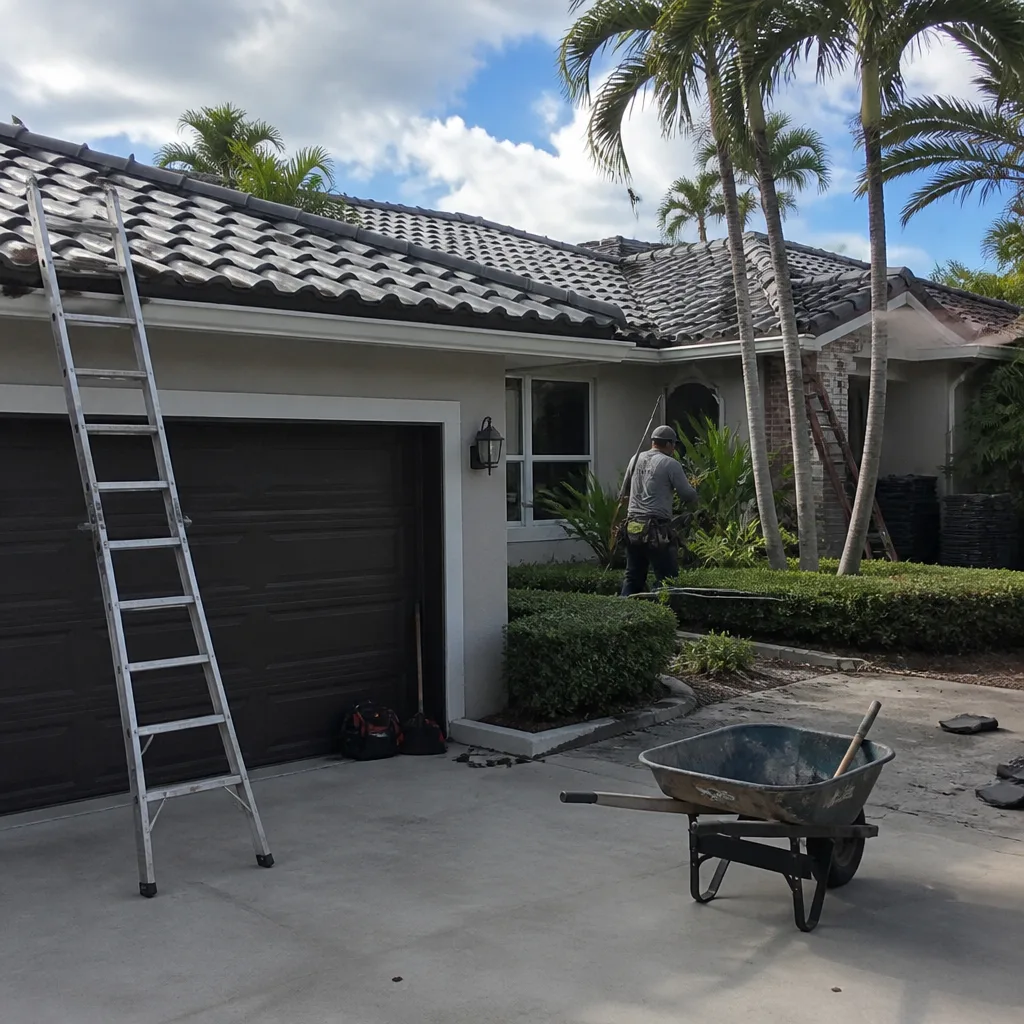
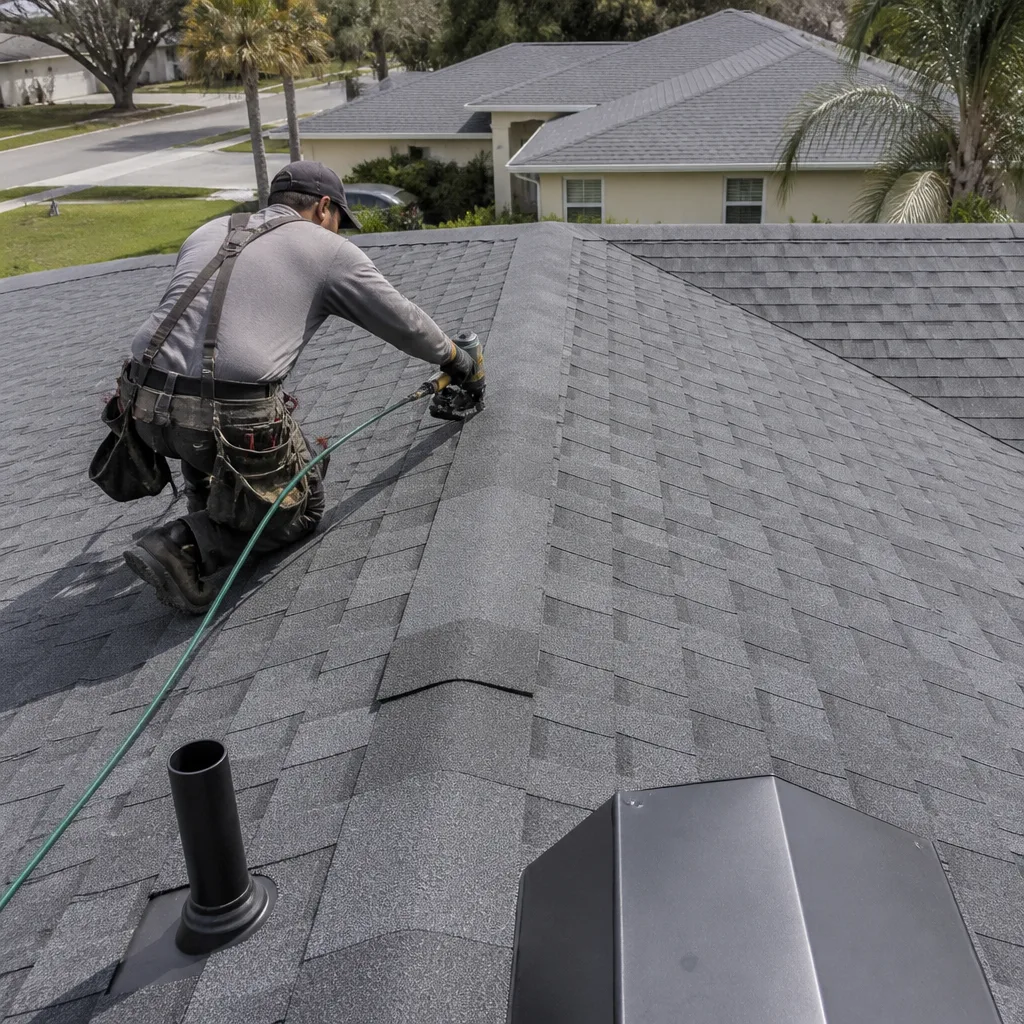
See the difference
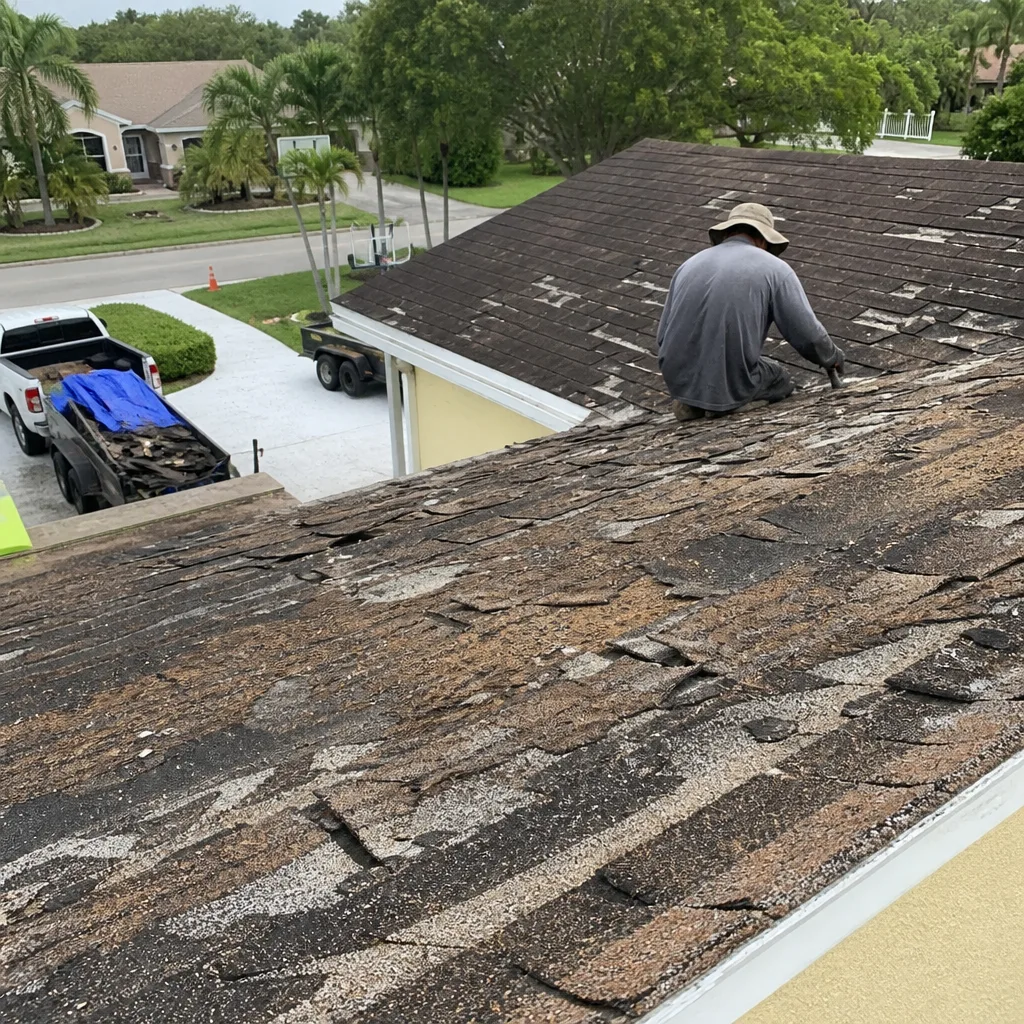 Before
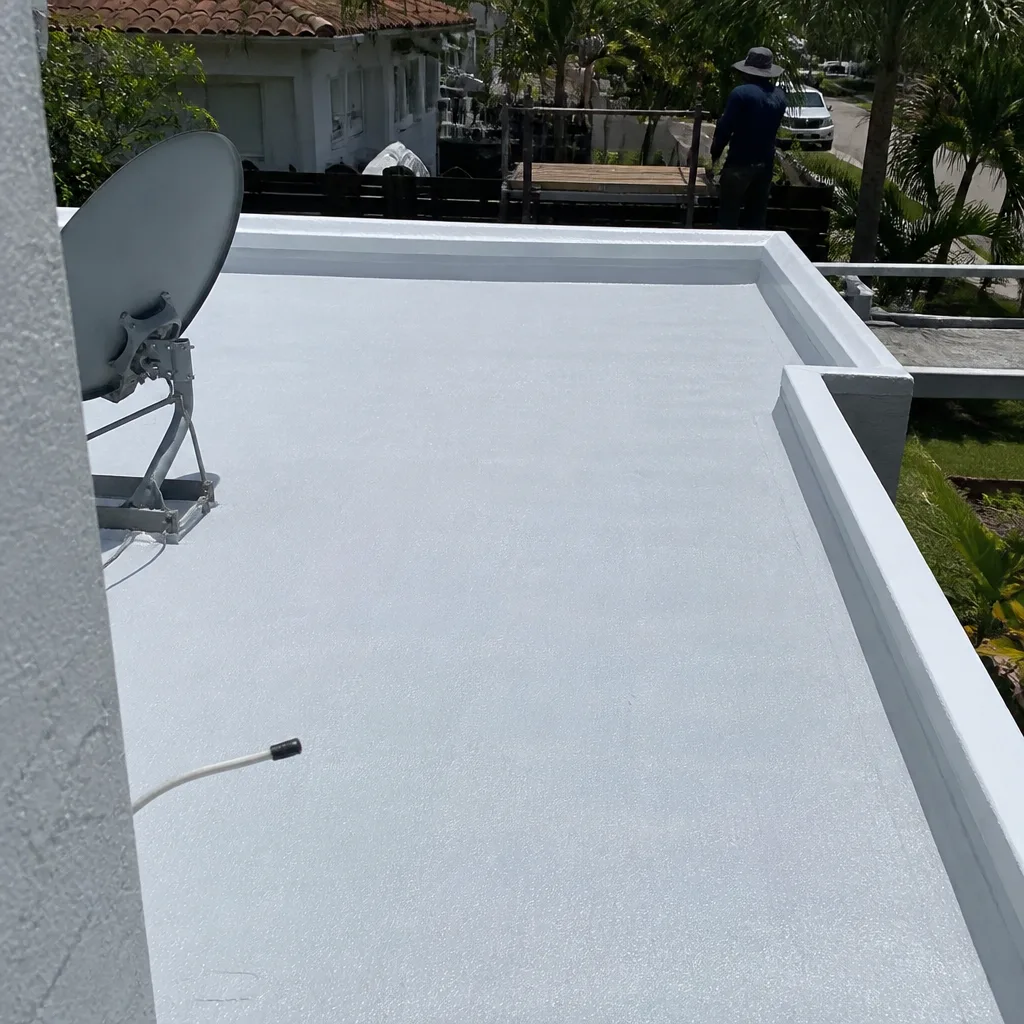 After
After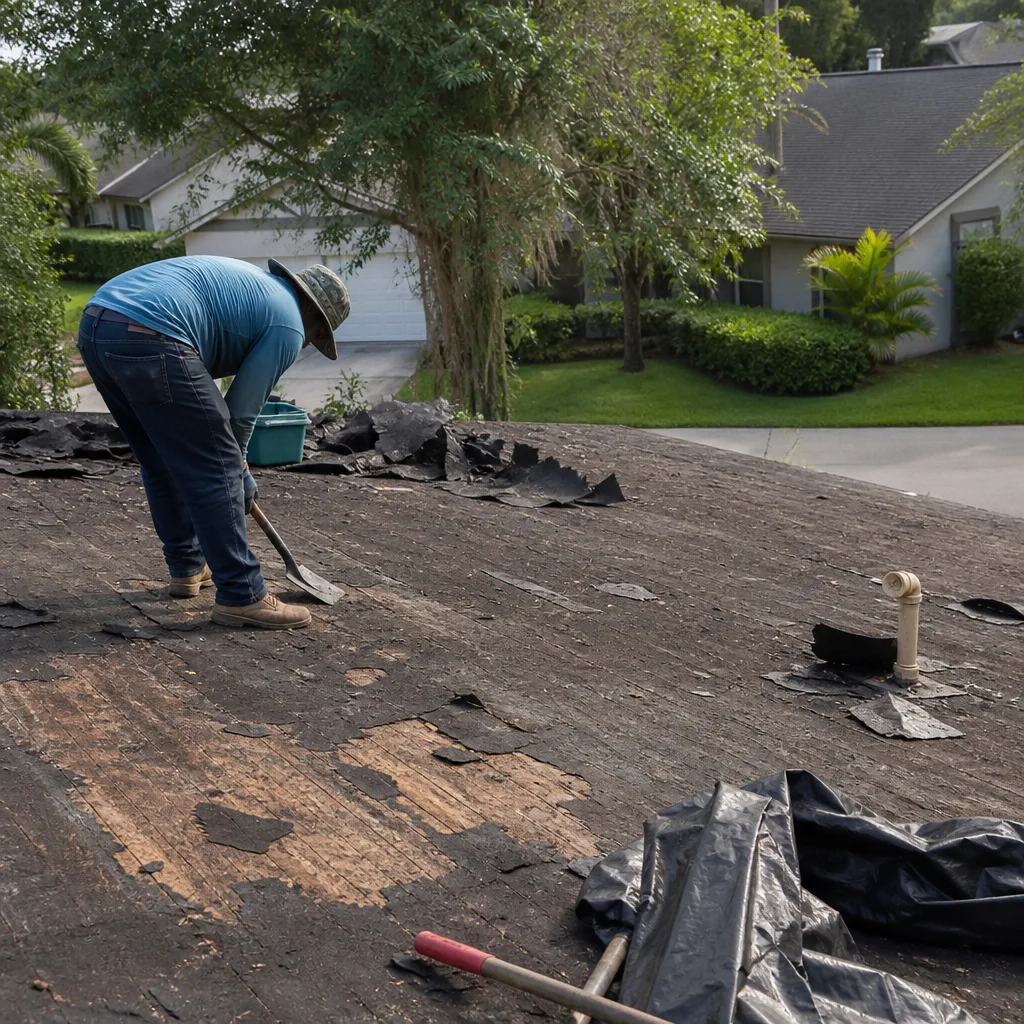 Before
 After
After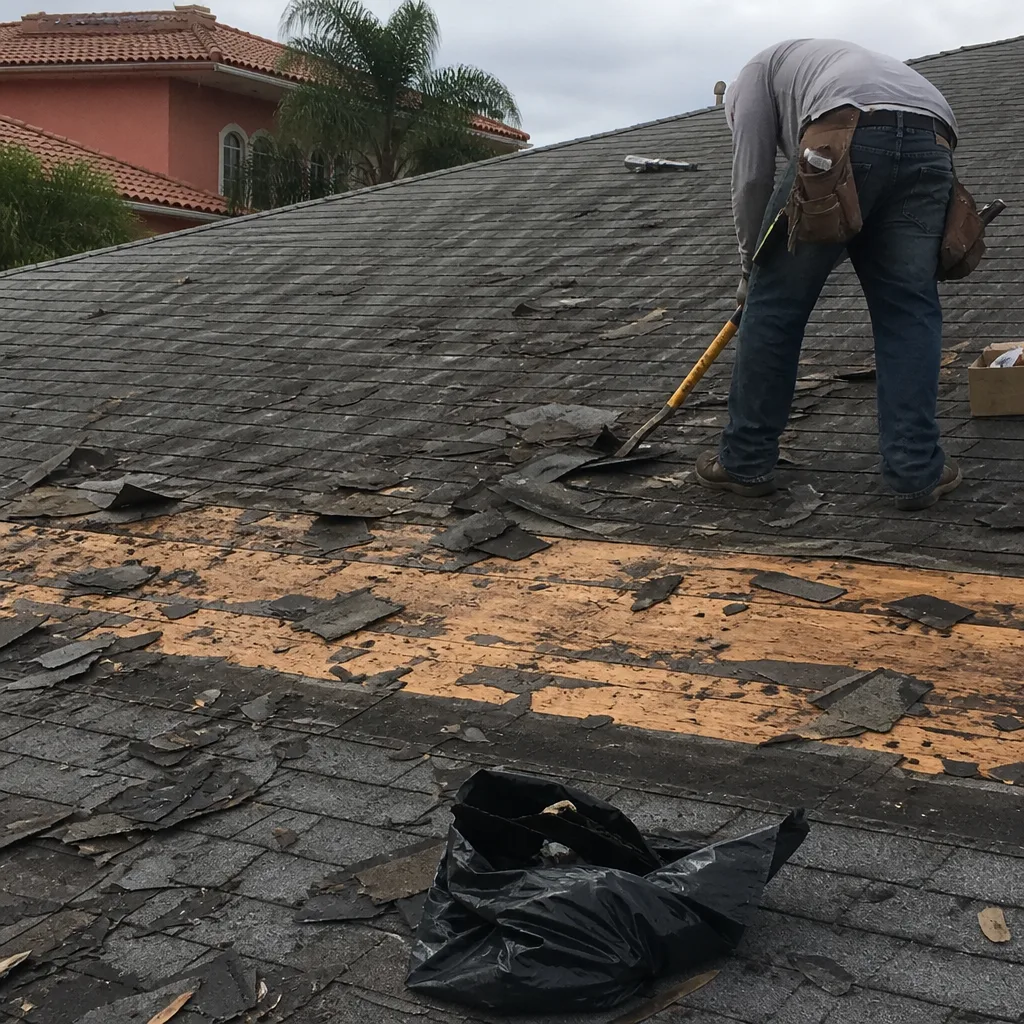 Before
 After
AfterFrequently Asked Questions
Roof repairs in Miami typically run from $350 for a small flashing fix to $2,500 or more for multiple leak points with rotted decking. A full shingle roof replacement on a 2,000-square-foot home generally costs $11,000 to $19,000 depending on shingle brand and decking condition. The best way to know your exact price is to get a written line-item quote before any work starts. Call (850) 753-2996 for a free estimate from Mercer Roofing Co Miami, with the price in writing before you commit.
Visit myfloridalicense.com, click “Verify a License,” and search by the contractor’s name or company name. An active Certified Roofing Contractor license means the contractor can legally work in Miami. Inactive, suspended, or null-and-void status means they cannot pull permits or perform work legally.
The contractor should pull the permit. The name on the permit is the name legally responsible for the work. A contractor who asks you to pull the permit is trying to shift legal exposure onto you. Every Mercer Roofing Co Miami roof installation in Miami includes permit pull and inspection scheduling in your contract.
Five clauses: the scope of work, a materials spec that names the shingle manufacturer and product line, a payment schedule that doesn’t require full upfront payment, permit responsibility assigned to the contractor, and workmanship warranty terms with a specific timeline. If any of these are missing, don’t sign.
Differences come down to shingle brand and grade, whether the old roof is torn off or overlaid, underlayment type, ventilation, and the contractor’s overhead including insurance, licensing, and workers’ comp. A lower bid usually means cheaper materials or missing coverage, not a better deal. Compare the materials spec line by line before choosing.
Yes. Mercer Roofing Co Miami offers free written estimates to homeowners throughout Miami. Every estimate includes a line-item price, so you know exactly what you’re paying before you decide. Call (850) 753-2996 to schedule yours, and a live person will answer.
The Bottom Line
Hiring a roofing contractor in Miami is not complicated when you do it in the right order: verify the DBPR license, ask who’s coming to your door, get a written price, read the contract for the five clauses that matter, confirm the permit is in the contractor’s name, and verify insurance with a certificate. Most bad outcomes in roofing are not the result of bad luck, so review our more guides & resources to stay informed. They’re the result of skipped steps. If you follow this process, and you hold every contractor to the same standard, you’ll end up with a roof that protects your home and a contract that protects you. If you’re ready to talk to a licensed, insured team that puts it all in writing, call Mercer Roofing Co Miami at (850) 753-2996 today.
Written by Grant Whitlock, Owner at Mercer Roofing Co Miami, serving Miami since 2000.