
Last updated October 17, 2026
 Metal roofing
 Architectural shingles
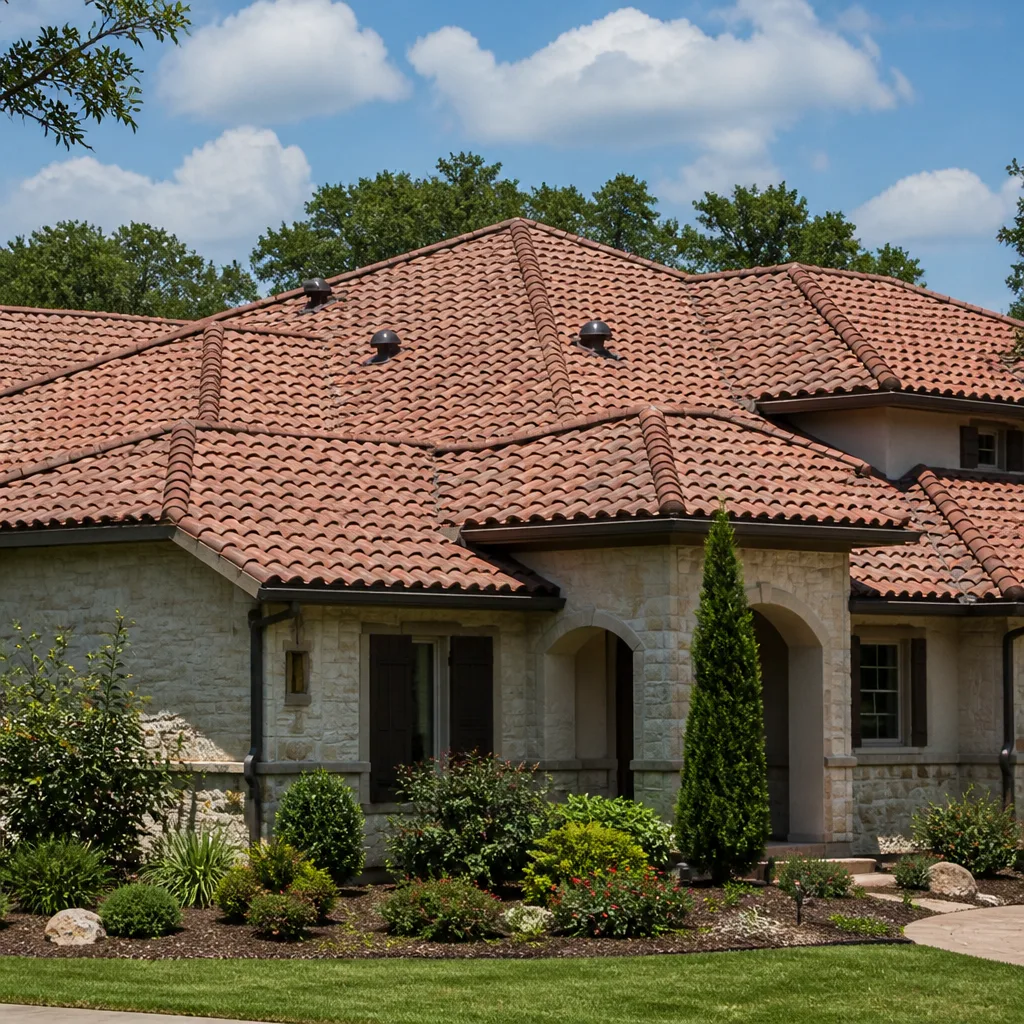 Tile roofing
 GAF
GAF Owens Corning
 Flat & low-slope
Free roof inspection with deck photos before we talk money - GAF and Owens Corning certified installation
DIY vs Professional Roofing: The Miami Homeowner’s Decision Guide
In 2023, a Miami homeowner in West Kendall replaced 15 cracked clay tiles after a windstorm. The work looked fine. Eight months later, a water heater in the garage leaked and caused $14,000 in damage. The insurance adjuster noticed the tiles during the inspection, pulled the permit history, found none, and denied the claim. Not because the tiles caused the leak. Because the unpermitted repair voided the policy’s coverage terms. The permit would have cost $125. This guide explains exactly where the legal line sits for Miami homeowners, what you can do yourself without consequences, what requires a licensed contractor, and what it actually costs either way. If you own a roof in Miami-Dade County, this is the decision map you need before touching a single tile.
Quick Answer
For most roofing work in Miami, hiring a licensed professional is not just the safer choice, it’s the legally required one. Miami-Dade County sits in a High Velocity Hurricane Zone (HVHZ), which means building code restricts most roof repairs and all roof replacements to licensed contractors with pulled permits. Homeowners acting as their own contractor can legally handle only three narrow tasks, and crossing that line can void your insurance coverage retroactively. The expected cost of DIY, once insurance exposure and code fines are factored in, is almost always higher than a professional repair.
Styles & brands we work with
Table of Contents
- What Florida Law Actually Says About DIY Roofing
- The Three Tasks Miami Homeowners Can Legally Do Themselves
- How DIY Roofing Affects Your Homeowner’s Insurance
- The Real Cost Comparison: A 10-Square Tile Repair
- The Physical Safety Reality Miami Guides Omit
- How Insurance Adjusters Identify DIY Roof Work
- What a Professional Miami Roof Repair Actually Includes
- Common Mistakes to Avoid
What Florida Law Actually Says About DIY Roofing
Florida Statute 489.103(7) contains what’s known as the “homeowner exemption.” It says a property owner may act as their own contractor on their own primary residence without holding a contractor’s license. The key words are “primary residence.” Investment properties, rental homes, vacation condos, and any structure you don’t live in as your main home do not qualify.
But the state statute is only the starting point. Miami-Dade County has its own amendments to the Florida Building Code, and this is where most guides get it wrong. Because Miami-Dade sits in the HVHZ, the county code imposes additional restrictions that override parts of the state exemption. Section 11-19 of the Miami-Dade County Code limits self-performed roofing work in HVHZ-designated areas to specific, narrow tasks. You cannot pull a permit for a full roof replacement as a homeowner-contractor in unincorporated Miami-Dade or most municipalities within it. The county simply will not issue you the permit for structural roofing work, and doing the work without one is a code violation that carries fines starting around $500 and scaling upward with the scope of the unpermitted work.
What “Primary Residence” Really Means
Florida defines primary residence by documentation: your homestead exemption on file with the Miami-Dade Property Appraiser, your driver’s license address, and your voter registration. If you claim homestead, you have standing as a homeowner-contractor. If the property is a rental, second home, or held in an LLC without homestead designation, the exemption does not apply and any self-performed roofing work is unlicensed contracting, which is a first-degree misdemeanor in Florida.
Even when the exemption applies, the work still requires a permit. The homeowner exemption does not waive the permitting requirement in Miami-Dade. It only waives the license requirement. Many homeowners believe the exemption means “I can do what I want.” It doesn’t. It means “I can pull a permit in my own name for the categories of work the county allows.” For roofing in the HVHZ, that list is very short.
The Three Tasks Miami Homeowners Can Legally Do Themselves
Here’s the full list. Not a summary. The complete legal scope for DIY roofing in Miami-Dade County without a permit or license:
- Clearing debris from the roof, gutters, and valleys. Leaves, palm fronds, Mango tree droppings, and general storm litter can be removed by the homeowner. No permit required. This is maintenance, not construction.
- Applying roof cement to existing flashings as a temporary seal. If a pipe boot flashing or a chimney flashing has a visible gap, you may apply roofing cement or a silicone sealant as a stopgap measure. This is considered maintenance. The moment you remove and replace the flashing itself, you’ve crossed into repair work that requires a contractor and permit.
- Replacing individual broken tiles under a specific count. Miami-Dade code allows a homeowner to replace up to 10 individual tiles per calendar year without a permit, provided that the replacement tiles match the existing roof in material, profile, and color, and the underlayment beneath them is not compromised. If water has penetrated the underlayment, the repair is structural and no longer qualifies. Exceed 10 tiles and you need a permit, which in HVHZ territory means a licensed contractor.
That’s it. Three tasks. Everything else, from replacing underlayment to re-flashing a chimney to repairing decking to a full reroof, requires a licensed contractor and a permit in Miami-Dade. If a guide tells you more than this, it’s wrong. And “wrong” in this context is not an academic distinction. It’s the difference between an insured house and an uninsurable one.
For homeowners who want to understand the full scope of professional Roof Repair in Miami, including what a licensed contractor can handle that a homeowner cannot, the legal framework above is the starting point.
How DIY Roofing Affects Your Homeowner’s Insurance
Here’s the paragraph in your policy you’ve never read. Most Florida homeowner’s policies, including those from Citizens, Universal, and TypTap, contain language in the “Conditions” section that looks something like this: “We will not pay for loss or damage caused by or resulting from any repair, alteration, or modification performed by an unlicensed contractor or in violation of applicable building codes.”
The language varies by carrier, but the substance is consistent. If you perform roofing work that required a permit and a license, and you did it yourself, the insurer can deny any claim they can tie, even loosely, to that work. The tie does not need to be causal. The West Kendall example at the top of this guide is real in its pattern: a water heater claim denied because adjusters found unpermitted roof work during an unrelated inspection. The insurer’s position is that the policy was voided by the homeowner’s failure to maintain code compliance on the property. Courts in Florida have repeatedly upheld such denials.
And here’s what makes this worse in Miami specifically. After Hurricane Irma in 2017 and Hurricane Ian in 2022, Florida insurers aggressively re-underwrote properties. Many carriers now do pre-policy inspections that include drone flyovers of roofs. A drone photo of mismatched tile profiles or visible repair seams can trigger a cancellation notice even before a claim is filed. So the cost of the unpermitted work is not just a denied claim later. It might be losing your coverage entirely.
How Adjusters Spot DIY Work
Adjusters are trained to look for three patterns: mismatched tile profiles or colors that indicate a patch repair, visible sealant or caulk lines around flashings that indicate a homeowner-caliber fix rather than a mechanical flashing replacement, and missing permit records that correspond to the age of the repairs. In Miami-Dade, permit records are public, searchable online, and routinely checked during any claim involving water intrusion, wind damage, or structural concerns. If the repair looks older than the last permitted re-roof, and no permit history exists for the repair, the adjuster flags it. From there, denial is procedural.
The Real Cost Comparison: A 10-Square Tile Repair
Let’s put real numbers on a common Miami scenario: a wind event breaks 40 clay tiles across a 10-square area, and the underlayment is intact. Here’s what the two paths look like.
| Cost Item | DIY Path | Professional Path |
|---|---|---|
| Matching tiles (40 count) | $180 – $320 (depending on profile match) | Included in fixed price |
| Concrete tile adhesive, fasteners, sealant | $60 – $110 | Included |
| Tools (tile lifters, slate ripper, safety gear rental) | $90 – $175 | Included |
| Permit (required above 10 tiles) | Not legally obtainable by homeowner in HVHZ | $125 – $400 (pulled by contractor) |
| Labor | 8 – 14 hours of your time | Professional crew, typically done in one day |
| Insurance exposure (unpermitted work voiding policy) | Full replacement cost of home interior if claim denied | $0 |
| Total out-of-pocket | $330 – $605 plus exposure risk | $1,400 – $2,800 fixed price |
The DIY path saves perhaps $1,000 to $2,000 in direct cash. But when you weigh the expected cost of the insurance exposure, the math changes. If there’s even a 10% chance that unpermitted work leads to a denied claim on a home with a $300,000 interior, the expected cost of the DIY path is an additional $30,000. That’s the number no DIY guide includes, because it’s inconvenient.
And this is where the professional option earns its price. A written, fixed price from a licensed Roofing Company in Miami includes the tile match, the adhesive system, the permit, the code inspection, and the warranty. The price on the invoice is the price you pay. There is no change order because the scope was written before work began. That’s the certainty homeowners are paying for, and it’s the cheapest part of the whole transaction.
The Physical Safety Reality Miami Guides Omit
Most DIY roofing articles are written by people who have never stood on a Miami roof in July. Here’s what they leave out.
First, the heat. A clay or concrete tile roof in Miami-Dade reaches surface temperatures of 140°F to 160°F between 11 a.m. and 4 p.m. for roughly four months of the year. The heat index, which factors in Miami’s 70%+ humidity, puts the effective working temperature above 110°F. Heat exhaustion sets in within 30 to 45 minutes of sustained exposure. A homeowner who spends a Saturday morning on a hot tile roof is making decisions with a heat-stressed brain on a sloped surface. Falls happen.
Second, the pitch. Most Miami homes have a roof pitch between 4:12 and 6:12. That’s walkable for a professional with a harness and foam pads, but it’s a fall hazard for an amateur in sneakers. Tile roofs are especially deceptive because the tiles themselves can crack under foot traffic if not stepped on correctly. One wrong step can displace a tile, create a new leak, and add a fall injury to the project.
Third, and this is the one nobody mentions: Workers’ Compensation. If you hire an unlicensed helper, a neighbor, or a handyman to assist with roof work, and that person is injured on your property, you are personally liable. Florida’s workers’ compensation system does not cover unlicensed workers on residential jobs. A fall from a roof that results in a back injury can produce a medical bill north of $100,000, and your homeowner’s insurance may not cover it if the work was unpermitted and the helper was unlicensed. A licensed contractor carries their own workers’ compensation insurance. When a Mercer Roofing Co Miami technician is on your roof, their safety is their company’s responsibility, not yours.
How Insurance Adjusters Identify DIY Roof Work
This is the technical section of the guide, and it’s here because knowing how the process works keeps you from walking into it blind. Adjusters in South Florida use a specific playbook for identifying unpermitted roofing work.
Step-by-Step: How an Adjuster Evaluates Your Roof
- Drone flyover. Since 2020, most Florida carriers require drone photography as part of any water intrusion or wind claim. The drone captures tile profile, color consistency, and sealant patterns.
- Visual pattern matching. The adjuster looks for “repair seams”: areas where tile color, profile, or mortar lines differ from the surrounding roof. A patch repair is visually obvious from 20 feet in the air.
- Permit history pull. Miami-Dade’s building permit database is online and searchable by address. The adjuster checks the permit history for the roof’s age and compares it to the condition of the roof. Repairs with no corresponding permit are flagged.
- Underlayment inspection. If the interior damage suggests water intrusion through the roof deck, the adjuster will inspect the underlayment beneath the tiles. Homeowner repairs rarely touch the underlayment, and that omission often reveals the problem.
- Documentation request. The adjuster asks for receipts, contractor invoices, and permit records for any roofing work performed in the last five years. If you cannot produce them, the denial process begins.
This process is not a secret. It’s standard operating procedure for every major carrier in Florida. The homeowner who replaces 15 tiles and says nothing has created a documentation gap that will surface the next time a claim is filed, whether the claim is related to the roof or not.
For homeowners reading this after having done DIY work and wondering what to do next, the answer is straightforward: call a licensed contractor for an inspection, get the work brought to code, and get it permitted retroactively where possible. Retroactive permitting in Miami-Dade is possible but expensive. It’s far cheaper to get it right the first time.
What a Professional Miami Roof Repair Actually Includes
When you hire a licensed roofing contractor in Miami, the price includes a set of deliverables that DIY work structurally cannot replicate. Here’s what you’re actually paying for.
- A written scope of work. Every professional repair starts with a written description of what will be done, what materials will be used, and what the total price will be. At Mercer Roofing Co Miami, this written price is provided before any work starts, every time, on every job. No surprises on the invoice.
- The permit and the inspection. The contractor pulls the Miami-Dade permit, schedules the inspection, and is responsible for passing it. The inspection is your proof of code compliance, and that proof is what protects your insurance coverage.
- Manufacturer-recognized materials. Professional Miami roofers work with shingle and tile brands that meet Miami-Dade HVHZ product approval standards, including GAF, CertainTeed, Owens Corning, and Boral roof installation materials. These are products engineered for hurricane wind ratings and tested for the specific uplift requirements of the HVHZ.
- A written workmanship guarantee. Mercer Roofing Co Miami includes a written 365-Day Done Right Promise on every repair. If the work is not right within a year, Mercer makes it right, including a free second visit if the repair fails. That’s not a slogan. It’s a written term, included with every job.
- Vetted, badged technicians. Every Mercer technician is background-checked, identity-verified, and dispatched under the Threshold Verified standard. The technician’s name and photo are sent to you before they arrive, and they badge in at the door with a photo ID. You know exactly who is on your property and have proof at the door.
That last item matters more than most people realize. A homeowner who hires a contractor sight unseen, based on a door knock or a Facebook ad, is inviting a stranger onto their property. In Miami, roofing scams spike after every storm season. The Mercer Roofing Co Miami home page explains the full vetting process in detail. The short version: the person on your roof is the person whose name and photo you received before the visit. No unknowns.
Common Mistakes to Avoid
- Replacing more than 10 tiles without a permit. This is the most common DIY error in Miami-Dade. The 10-tile annual limit is a hard code line. Exceed it and the work is unpermitted, even if every tile is a perfect match.
- Assuming the homeowner exemption covers rentals or second homes. It doesn’t. The exemption applies only to your homesteaded primary residence. Roofing work on any other property requires a licensed contractor, full stop.
- Applying sealant over a flashing failure instead of replacing the flashing. Sealant is a temporary stopgap, not a repair. If the flashing has pulled away from the roof deck, sealant will fail within a season, and the resulting leak will be worse because the sealant hid the problem during inspection.
- Hiring a handyman with “roofing experience” who lacks a Miami-Dade contractor’s license. If the person is injured on your roof, you own the medical bills. If the work fails, you own the damage. If the work is discovered, you own the insurance denial. There is no scenario where the unlicensed handyman is the cheaper option.
- Walking on a tile roof in work boots or sneakers. Tile roofs require specific foot placement and distribution to avoid cracking tiles. A homeowner walking across a tile roof in regular footwear will crack tiles at a rate of roughly one in four steps. You’ll create more damage than you came to fix.
- Ignoring the underlayment. In Miami’s HVHZ, the underlayment is the waterproofing layer. Tiles are the armor. If water has reached the underlayment, the repair is structural and requires a permit, even if only a few tiles are broken. DIY tutorials never mention this, and it’s the most expensive oversight a homeowner can make.
See the difference
 Before
 After
After Before
 After
After Before
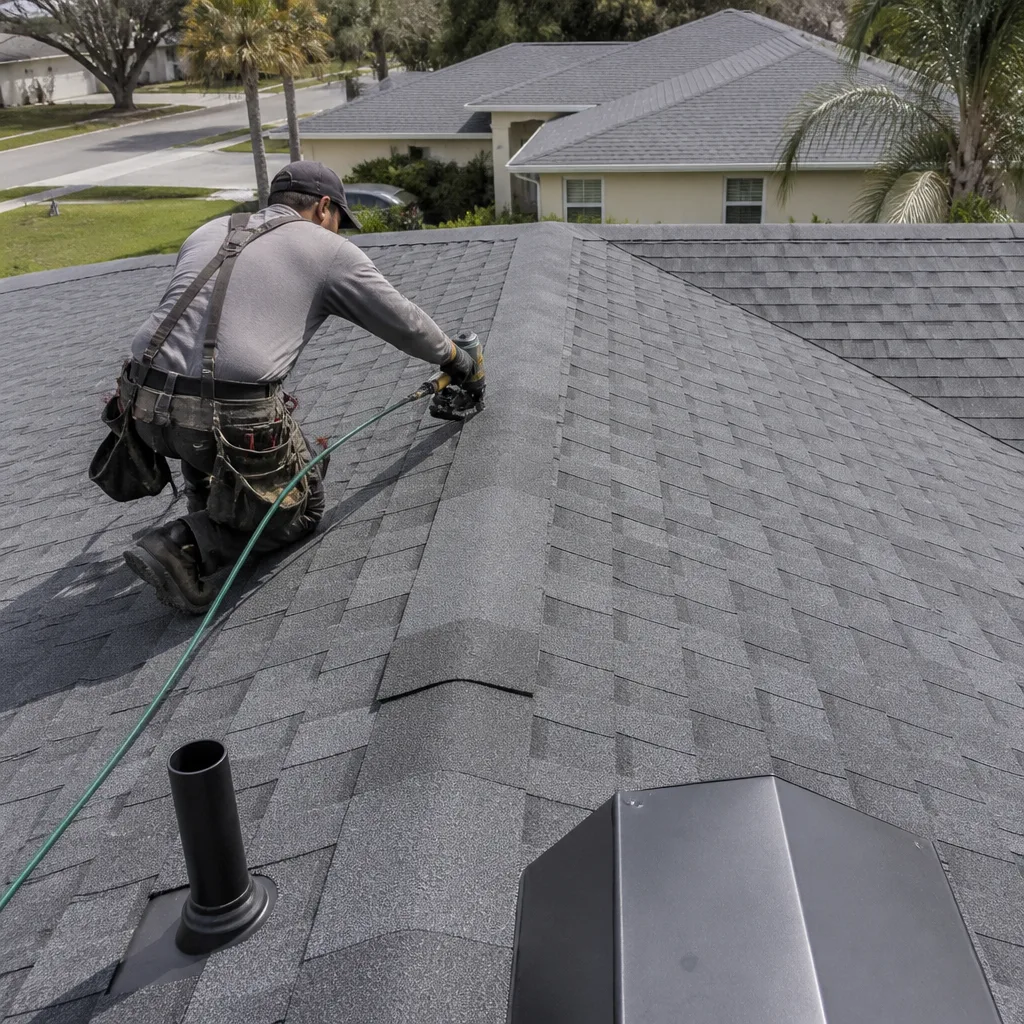 After
AfterWhen to Call a Professional
Here’s the short version. Call a licensed roofing contractor if you’ve noticed any of these: water stains on your ceiling or walls, granule loss from asphalt shingles collecting in gutters, cracked or displaced tiles beyond a handful, daylight visible through the roof deck in your attic, or visible rust or separation around any flashing. Also call if your roof is older than 15 years and has never been inspected by a licensed professional, regardless of visible condition. A Roof Repair Maintenance Checklist for Miami Homeowners can help you spot warning signs before they become costly problems. In Miami’s climate, roof systems age faster than in most of the country. What looks fine from the ground is often failing from underneath.
Mercer Roofing Co Miami offers free estimates in Miami. Every estimate includes a written price before any work starts, a written guarantee on every repair, and technicians who arrive badged, uniformed, and identity-verified under the Threshold Standard. Call (850) 753-2996 to schedule your evaluation. A live person answers the phone, 24/7.
Frequently Asked Questions
For most roofing work, no. Miami-Dade’s HVHZ amendments restrict self-performed roofing permits to the narrow maintenance tasks described above. A homeowner cannot pull a permit for structural roof repair, underlayment replacement, or full reroof in the HVHZ. Those permits require a licensed contractor. Call (850) 753-2996 for a free estimate if you’re unsure where your project falls.
Roofing permits in Miami-Dade typically range from $125 to $400 depending on project scope and municipality. The permit fee is included in a professional contractor’s fixed price. Attempting to save the permit fee by self-performing structural work loses far more than it saves, since unpermitted work can void your insurance coverage. Call (850) 753-2996 for an exact price on your roofing project.
Generally no. Most Florida policies exclude damage attributable to unlicensed or unpermitted repair work. Worse, the existence of unpermitted work on the property can be used to deny unrelated claims, because the policy was technically voided by the code violation. The specific policy language varies by carrier, but the pattern is consistent across all major Florida insurers.
The county can issue a code enforcement citation with fines, require the work to be brought into compliance (which usually means hiring a licensed contractor to redo it properly), and flag the property in the permitting database. A flagged property can complicate future sales, refinances, and insurance renewals. The cost of compliance after the fact is always higher than doing it right initially.
Most tile repair jobs, including the permit and inspection, are completed within three to seven business days in Miami-Dade. The on-site work itself typically takes one day. The timeline depends on inspection scheduling and tile availability. Mercer Roofing Co Miami provides a written timeline and a written price before any work begins. Call (850) 753-2996 to schedule a free estimate.
Ask for their Florida contractor’s license number and verify it on the DBPR website. Ask whether the price includes the permit and the inspection. Ask whether the guarantee is written and what it covers. Ask for a written scope of work before agreeing to anything. And ask who exactly will be on your roof, with the name and photo of the technician sent before they arrive. If any of these questions is met with resistance, that’s your answer.
The Bottom Line
DIY roofing in Miami is not a question of skill or confidence. It’s a question of code, insurance, and liability. Three narrow maintenance tasks are legally yours to do. Everything else belongs to a licensed contractor pulling a permit in a county that treats roofing as a structural, life-safety system, because in a hurricane zone, it is. The money you save doing structural work yourself gets spent, with interest, when your insurer denies a claim or the county flags your property. The professional option costs more on the invoice and less in expected value, and it comes with the written price, written guarantee, and vetted technician that make the whole experience predictable. For more guides & resources on protecting your Miami home, explore our blog. In Miami, the smart DIY roofing decision is knowing when not to.
Written by Grant Whitlock, Owner at Mercer Roofing Co Miami, serving Miami since 2000.